Tithonus - Alfred, Lord Tennyson - ISC - Std XII
- 3 days ago
- 9 min read
Updated: 1 day ago

Section 1 — Poem Information
Poem Title: Tithonus
Poet: Alfred, Lord Tennyson
Course: ISC Class 12 Literature in English (CISCE)
Anthology: RHAPSODY: A Collection of ISC Poems (Evergreen Publications)
Exam Component: Theory Paper, Section B, Poetry (20 marks)
Section 2 — About the Poet
Alfred, Lord Tennyson (1809–1892) was the pre-eminent poetic voice of Victorian Britain and served as Poet Laureate for over four decades. Renowned for masterworks like In Memoriam A.H.H. and Ulysses, his writing is defined by lyrical grace, melancholic reflection, and an abiding fascination with time, loss, and the boundaries of human knowledge. In "Tithonus", Tennyson transforms classical mythology into a profound psychological monologue, exploring how the desire to bypass natural mortality leads not to transcendence, but to tragic physical decay and spiritual alienation from the living world.
Section 3 — Poem Progression Map
Stanza Number | What It's About |
Stanza 1 (Lines 1–10) | Tithonus contrasts the natural rhythm of decay and death with the curse of his own unending physical decline. |
Stanza 2 (Lines 11–31) | The speaker recalls his youthful hubris in demanding immortality and laments the ravages wrought by personified Time. |
Stanza 3 (Lines 32–35) | Dawn breaks across the horizon, accompanied by the silent sorrow and glistening tears of the goddess Eos. |
Stanza 4 (Lines 36–49) | Tithonus fears divine immutability as Eos prepares her celestial chariot amid brilliant, unyielding splendour. |
Stanza 5 (Lines 50–63) | A vivid recollection of past passionate love briefly rekindles warmth before dissolving into feelings of unreality. |
Stanza 6 (Lines 64–70) | The speaker recognises the fundamental incompatibility between immortal celestial renewal and his withered mortal frame. |
Stanza 7 (Lines 71–76) | Tithonus delivers his final plea to be released back into the earth, embracing peaceful burial and forgetfulness. |
Section 4 — Stanza-wise Meaning & Analysis
Stanza 1 (Lines 1–10)
"The woods decay, the woods decay and fall, / The vapours weep their burthen to the ground…"
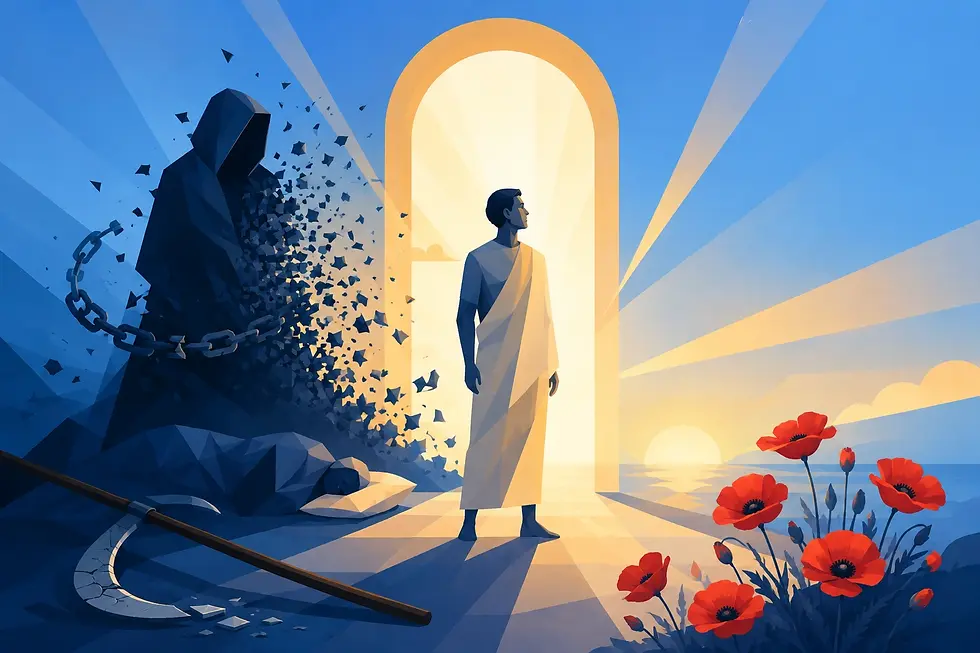
The monologue opens with an elegiac survey of the earthly realm, where forests, mists, human labourers, and swans naturally age and pass away. In contrast to this harmonious rhythm of life and death, Tithonus finds himself isolated as an insubstantial, white-haired shadow trapped in endless deterioration. Immortality functions not as a blessing but as an active agent of torment that steadily consumes his physical vitality without offering the release of death.
Stanza 2 (Lines 11–31)
"Alas! for this gray shadow, once a man— / So glorious in his beauty and thy choice…"
Tithonus reflects mournfully on his lost youth when his exceptional beauty won the love of Eos and prompted his proud request for eternal life. Although the goddess granted his wish, she neglected to bestow eternal youth, leaving the destructive forces of Time to wither his mortal flesh. The speaker acknowledges that human beings transgress divinely ordained limits at their peril, pleading with the goddess to rescind her gift.
Stanza 3 (Lines 32–35)
"A soft air fans the cloud apart; there comes / A glimpse of that dark world where I was born."
A brief visual shift reveals the morning breeze parting the clouds to unveil the distant mortal earth below. Eos begins her daily awakening with radiant cheeks and sorrowful, tear-filled eyes, remaining completely silent before her lover's plea. This poignant pause captures the tension between the majestic recurrence of dawn and the goddess's inability to alter an irrevocable grant.
Stanza 4 (Lines 36–49)
"Why wilt thou ever scare me with thy tears, / And shake the darkness from their loosened manes…"
The silent tears of Eos terrify Tithonus because they confirm the ancient truth that gods cannot take back their boons once given. Around him, the celestial realm bursts into dynamic vitality as dawn's fiery horses scatter the shadows of the night. This dazzling display of celestial renewal intensifies the speaker's misery by underscoring his complete exclusion from the morning's rejuvenation.
Stanza 5 (Lines 50–63)
"Ay me! ay me! with what another heart / In days far-off, and with what other eyes…"
The speaker immerses himself in sensuous memories of his youthful intimacy with Eos, recalling her glowing beauty, tender kisses, and musical voice. Yet this passionate memory quickly yields to profound alienation, causing Tithonus to question whether his former happiness was merely an illusion. The immense span of endless time has severed the psychological continuity between the vibrant youth he once was and the withered ghost he has become.
Stanza 6 (Lines 64–70)
"Thou seest all things, thou wilt see my grave; / Thou wilt renew thy beauty morn by morn…"
Tithonus observes the personified Hours continuously reviving Eos while leaving him cold, decrepit, and out of place in her radiant realm. He openly envies mortal men who possess the gift of dying and find rest beneath grassy burial mounds. This recognition prepares his final argument by redefining death as a sacred rest and a rightful return to nature.
Stanza 7 (Lines 71–76)
"Release me, and restore me to the ground; / Thou seëst all things, thou wilt see my grave…"
The poem concludes with a dignified prayer for release, asking Eos to return him to the soil from which he came. The word "restore" transforms death from a feared extinction into a healing reunion with the natural world. Tithonus accepts that while Eos must forever illuminate the sky, his own peace lies in burial, darkness, and the oblivion of memory.
Section 5 — Central Theme and Tone
5A. Central Theme
The poem illustrates that unending existence without perpetual youth is an unbearable curse, asserting that mortality is essential to giving human life structure and meaning. Tennyson warns against the hubristic desire to transgress natural boundaries, demonstrating that true human completion requires accepting the natural cycle of birth, decay, and death.
5B. Tone and Emotional Progression
The tone begins in weary, elegiac contemplation as the speaker observes natural decay, shifting to self-reproach when recalling his proud request for immortality. Sensuous nostalgia briefly surfaces in the memories of youthful love before declining into solemn resignation and quiet longing for the earth.
5C. Secondary Concerns
A significant secondary concern is the inherent tragedy of unequal love between mortal and divine beings. While Eos undergoes perpetual rebirth, Tithonus suffers irreversible decay, transforming their shared affection into a source of enduring sorrow and mutual helplessness.
Section 6 — Vocabulary in Context
Word / Phrase | Meaning in This Context | Stanza Reference |
Burthen | Moisture and vaporous weight discharged as rain to nourish the soil | Stanza 1 |
Cruel immortality | Endless duration that prolongs physical suffering by preventing the release of death | Stanza 1 |
White-haired shadow | An insubstantial, ghostly remnant of a once vigorous human being | Stanza 1 |
Strong Hours | Personified agents of time that age mortals while rejuvenating the gods | Stanzas 2 & 6 |
Goal of ordinance | The divinely established limit and natural boundary appointed for human life | Stanza 2 |
Wild team | The spirited celestial horses drawing the chariot of the dawn across the heavens | Stanza 4 |
Ambrosial | Fragrant, divinely sweet, and worthy of celestial deities | Stanza 5 |
Grassy barrows | Ancient earthen burial mounds representing peaceful completion and rest | Stanza 6 |
Restore me | Return the speaker to the earth to complete his natural cycle through death | Stanza 7 |
Section 7 — Key Literary & Stylistic Features
Device | Example | Effect | Stanza Reference |
Paradox | "Cruel immortality" | Overturns the traditional perception of eternal life as a blessing by presenting it as continuous torture. | Stanza 1 |
Personification | "The strong Hours have worked their wills" | Portrays Time as an active, unyielding power that wreaks havoc on mortal vulnerability. | Stanza 2 |
Kinetic Imagery | "Shake the darkness from their loosened manes" | Vividly depicts the energetic awakening of dawn, accentuating the speaker's stagnant decay. | Stanza 4 |
Symbolism | "Grassy barrows of the happier dead" | Transforms the image of burial mounds into a potent symbol of peaceful human completion. | Stanza 6 |
Section 8 — Structured Long-Answer Practice (One Sample Set)
Question (i)
How does the opening of "Tithonus" establish the speaker's tragic alienation? In your answer, incorporate:
The universal rhythm of decay in the natural world.
The paradoxical torment of endless existence.
[5 Marks]
Model Answer:
Natural order in the opening lines emphasises the universality of death across the physical world. Forests wither and shed their leaves, rain clouds discharge their moisture into the soil, human beings till the fields before resting beneath them, and even the long-lived swan eventually dies. This rhythmic cycle frames death as a necessary completion of existence. Tithonus stands entirely apart from this restorative pattern, cursed with an unending life that consumes his vitality rather than preserving it. His existence as a pale, wandering shadow exposes how limitless duration without youth hollows out human identity. Immortality therefore isolates him from humanity, turning what was sought as an exalted blessing into an unending physical and psychological punishment.
Question (ii)
Examine the dramatic significance of Eos's tears and silence during the monologue. In your answer, incorporate:
The emotional conflict suggested by her silent reaction.
The terrifying permanence of divine decrees.
[5 Marks]
Model Answer:
Silent sorrow defines Eos's response to Tithonus's desperate plea for release. Her glistening tears convey profound grief, love, and compassion, demonstrating that she is neither indifferent nor cruel toward her suffering mortal consort. However, her inability to speak or grant his request reveals the tragic helplessness of divine power when bound by ancient cosmic laws. Tithonus interprets her tears with dread, recalling the human conviction that tears from the gods bring suffering and confirm that divine gifts cannot be recalled. Her weeping signifies that even genuine divine love cannot dissolve the permanence of an ill-conceived boon. The contrast between her radiant dawn splendour and her helpless weeping deepens the tragic gulf dividing mortal frailty from immortal power.
Question (iii) — Whole-Poem Question: Internal Choice
Option (a)
"In 'Tithonus', mortality is presented as a profound human privilege rather than a tragic defeat." Discuss this statement with close reference to the poem.
[10 Marks]
Model Answer:
Mortality functions throughout Tennyson's dramatic monologue as the vital boundary that gives shape, dignity, and peace to human existence. The poem systematically contrasts the universal order of the earth with Tithonus's unnatural exemption from death. In nature, every living entity—from falling woods to the majestic swan—participates in a structured cycle where decline leads to peaceful rest. By removing the natural boundary of death while failing to grant eternal youth, Eos's gift reduces Tithonus to a withered husk wandering the cold margins of the celestial realm.
Endless duration without renewal erodes both physical strength and psychological certainty. Tithonus watches time personified by the Hours ravage his frame, turning his former glory to ashes and making even the memories of youthful love seem like distant dreams. His profound envy of mortal men resting peacefully in grassy burial mounds illustrates that the capacity to die is an enviable blessing. Death allows human beings to escape unending deterioration and find completion within their native soil.
The concluding stanza crystallises this insight through Tithonus's humble plea to be restored to the ground. The verb signifies a healing reconciliation with the earthly sphere, acknowledging that human beings belong to the natural order rather than the immortal sky. While Eos must forever rise in celestial radiance, Tithonus seeks the quiet blessing of burial and oblivion. Tennyson thus portrays death not as an enemy to be feared, but as an essential boundary that preserves the integrity of human life.
OR
Option (b)
Examine how Tennyson uses the contrast between Tithonus and Eos to develop the central themes of the poem.
[10 Marks]
Model Answer:
Contrasting the mortal speaker with the immortal goddess allows Tennyson to illustrate the tragic folly of transcending human limitations. Eos embodies dynamic, perpetual renewal. Every morning, the Hours rejuvenate her beauty, her fiery horses banish darkness, and her radiant chariot brings light to the waiting earth. Her immortality is harmonious because it is supported by eternal youth and intrinsic celestial vitality.
Tithonus, by contrast, suffers from static, unending decay. Because he was granted eternal life without eternal youth, the passage of time ravages his body without permitting death to end his misery. He exists as a decrepit, cold shadow immersed in the warm, rosy light of dawn, completely incapable of sharing in Eos's daily rebirth. This stark physical divergence underscores the impossibility of bridging the gulf between mortal and divine natures.
The emotional divergence between them reinforces this philosophical divide. Although they once shared passionate love, their present relationship is defined by helplessness and estrangement. Eos's silent tears reflect her inability to alter the irreversible consequences of her gift, while Tithonus feels alienated by the very splendour that surrounds her. The poem resolves this tension by assigning them distinct destinies: Eos belongs to the heavens where she will continually renew the morning, while Tithonus belongs to the earth where he can find rest in the soil. Through this profound contrast, Tennyson demonstrates that true harmony requires accepting the natural limits appointed to one's existence.
Section 9 — Personal Response Question
Q. What does "Tithonus" invite you to think, question, or feel about the human desire to escape ageing and death? Explain your response with reference to the poem.
Answer:
Tennyson's monologue evokes profound sympathy for Tithonus while compelling readers to re-evaluate the common desire for physical immortality. Witnessing a once-glorious youth reduced to a withered, wandering shadow highlights the horrifying consequences of desiring limitless duration without considering the quality of life. The poem effectively shows that human identity is inextricably bound to the natural flow of time, where ageing, memory, and final rest give meaning to our experiences. Tithonus's longing for burial mounds and the quiet earth encourages a healthy acceptance of our mortal boundaries, teaching us that death is not a failure of existence, but an essential completion of our shared human nature.
Section 10 — Beyond the Blog: Comprehensive ISC Preparation
This introductory blog post provides the foundational narrative and thematic insights required for classroom study. For in-depth examination mastery, our complete premium PDF resource offers a second full 20-mark practice set, whole-poem critical appreciation essays, Section A objective question banks, and detailed CISCE examiner scoring rubrics.