

8. जटायोः शौर्यम् - Jatayo Shouryam - Class 9 - Shemushi 1
Updated: Jan 29
1. Chapter Summary (Paath Saar)
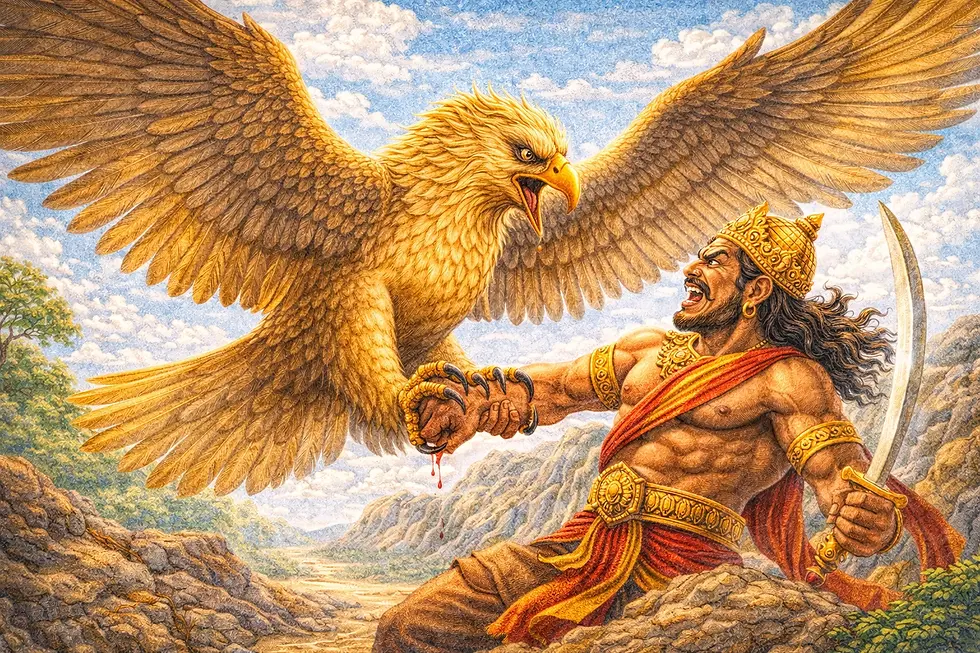
English Summary: This chapter is an excerpt from the Aranya Kanda of the epic Ramayana, written by Maharishi Valmiki. It describes the heroic battle between Jatayu, the king of birds, and the demon king Ravana.
When Ravana abducts Sita and takes her away, she weeps piteously and spots Jatayu perched on a tree. She pleads with him to rescue her. Jatayu, though old, challenges the young and powerful Ravana. He warns Ravana to desist from his sinful act, but Ravana refuses. A fierce battle ensues. Jatayu fights bravely with his sharp claws and beak. He destroys Ravana's chariot, kills his horses and charioteer, and breaks his jewelled bow. Despite being unarmed and aged, Jatayu inflicts severe wounds on Ravana and tears off his ten left arms, displaying immense valor in the protection of righteousness and women.
Moral (Sandesh): One must always stand up against injustice and protect the weak, regardless of one's age or the strength of the opponent. Bravery in a righteous cause is the highest virtue.
2. Sentence-by-Sentence Translation (Anuvad)
Sanskrit Text (Split Sandhis) | English Translation |
सा तदा करुणा वाचो विलपन्ती सुदुःखिता। | Then, that extremely sorrowful (Sita), lamenting with piteous words... |
वनस्पतिगतं गृध्रं ददर्शायतलोचना॥ | ...the wide-eyed one saw the vulture (Jatayu) perched on a tree. |
जटायो पश्य मामार्य ह्रियमाणामनाथवत्। | "O Noble Jatayu! Look at me being abducted like an orphan..." |
अनेन राक्षसेन्द्रेणाकरुणं पापकर्मणा॥ | "...mercilessly by this sinful king of demons." |
तं शब्दमवसुप्तस्तु जटायुरथ शुश्रुवे। | Then, the sleeping Jatayu heard that sound. |
निरीक्ष्य रावणं क्षिप्रं वैदेहीं च ददर्श सः॥ | He looked at Ravana and quickly saw Vaidehi (Sita) as well. |
ततः पर्वतशृङ्गाभस्तीक्ष्णतुण्डः खगोत्तमः। | Then the best of birds, resembling a mountain peak, with a sharp beak... |
वनस्पतिगतः श्रीमान्व्याजहार शुभां गिरम्॥ | ...perched on the tree, the glorious one spoke auspicious words. |
निवर्तय मतिं नीचां परदाराभिमर्शनात्। | "Turn your low mind away from touching another's wife." |
न तत्समाचरेद्धीरो यत्परोऽस्य विगर्हयेत्॥ | "A wise/brave man should not do that which others would criticize." |
वृद्धोऽहं त्वं युवा धन्वी सरथः कवची शरी। | "I am old; you are young, armed with a bow, chariot, armor, and arrows." |
न चाप्यादाय कुशली वैदेहीं मे गमिष्यसि॥ | "Yet, while I am alive, you shall not go safely taking Sita." |
तस्य तीक्ष्णनखाभ्यां तु चरणाभ्यां महाबलः। | Then, the mighty one (Jatayu), with his sharp claws and feet... |
चकार बहुधा गात्रे व्रणान् पतगसत्तमः॥ | ...the best of birds inflicted many wounds on his (Ravana's) body. |
ततोऽस्य सशरं चापं मुक्तामणिविभूषितम्। | Then his (Ravana's) bow, adorned with pearls and gems, along with arrows... |
चरणाभ्यां महातेजा बभञ्ज पतगेश्वरः॥ | ...the radiant king of birds broke with his feet. |
स भग्नधन्वा विरथो हताश्वो हतसारथिः। | He (Ravana), with broken bow, no chariot, killed horses, and killed charioteer... |
तलेनाभिजघानाशु जटायुं क्रोधमूर्च्छितः॥ | ...blinded by anger, quickly struck Jatayu with his palm/hilt. |
जटायुस्तमतिक्रम्य तुण्डेनास्य खगाधिपः। | The king of birds, Jatayu, counter-attacking/dodging him, with his beak... |
वामबाहून् दश तदा व्यपाहरदरिन्दमः॥ | ...the enemy-destroyer then tore off his ten left arms. |
3. Shloka Analysis
Shloka 1 सा तदा करुणा वाचो विलपन्ती सुदुःखिता। वनस्पतिगतं गृध्रं ददर्शायतलोचना॥
Anvaya: तदा सुदुःखिता करुणाः वाचः विलपन्ती सा आयतलोचना (सीता) वनस्पतिगतं गृध्रं ददर्श।
English Meaning: Then, the extremely sad wide-eyed Sita, lamenting with piteous words, saw the vulture (Jatayu) perched on a tree.
Shloka 5 निवर्तय मतिं नीचां परदाराभिमर्शनात्। न तत्समाचरेद्धीरो यत्परोऽस्य विगर्हयेत्॥
Anvaya: (रावण!) परदाराभिमर्शनात् (तव) नीचां मतिं निवर्तय। धीरः तत् न समाचरेत् यत् अस्य परः विगर्हयेत्।
English Meaning: (O Ravana!) Turn your low mind away from touching another's wife. A wise person should not practice that behavior which others would criticize/condemn.
Shloka 6 वृद्धोऽहं त्वं युवा धन्वी सरथः कवची शरी। न चाप्यादाय कुशली वैदेहीं मे गमिष्यसि॥
Anvaya: अहं वृद्धः (अस्मि), त्वं युवा, धन्वी, सरथः, कवची, शरी (असि), (तथापि) मे (जीवति सति) वैदेहीम् आदाय (त्वं) कुशली न गमिष्यसि।
English Meaning: I am old, and you are young, having a bow, chariot, armor, and arrows. Even so, while I am alive, you shall not go safely taking Vaidehi (Sita).
Shloka 8 ततोऽस्य सशरं चापं मुक्तामणिविभूषितम्। चरणाभ्यां महातेजा बभञ्ज पतगेश्वरः॥
Anvaya: ततः महातेजाः पतगेश्वरः अस्य मुक्तामणिविभूषितं सशरं चापं चरणाभ्यां बभञ्ज।
English Meaning: Then the great radiant king of birds broke his (Ravana's) bow, which was decorated with pearls and gems and held arrows, using his feet.
4. Word Meanings (Kathin Shabdarth)
आयतलोचना (Ayatalochana) = Wide-eyed (विशालाक्षी)
ह्रियमाणाम् (Hriyamanam) = Being abducted/carried away (नीयमानाम्)
शुश्रुवे (Shushruve) = Heard (श्रुतवान्)
पर्वतशृङ्गाभः (Parvatashringabhah) = Resembling a mountain peak (पर्वतशिखरवत् उन्नतः)
परदाराभिमर्शनात् (Paradaraabhimarshanat) = From touching another's wife (परस्त्रीस्पर्शात्)
विगर्हयेत् (Vigarhayet) = Should condemn/criticize (निन्दितं कुर्यात्)
धन्वी (Dhanvi) = Armed with a bow (धनुर्धरः)
भग्नधन्वा (Bhagnadhanva) = One whose bow is broken (भग्नं धनुः यस्य सः)
अरिन्दमः (Arindamah) = Destroyer of enemies (शत्रुदमनः)
व्यपाहरत् (Vyapaharat) = Tore off / Removed (पृथक् अकरोत् / नाशितवान्)
5. Competency-Based Assessment
A. Question Construction (Prashna Nirman)
Sentence | Question | Explanation |
आयतलोचना गृध्रं ददर्श। | का गृध्रं ददर्श? | Used 'Ka' because 'Ayatalochana' is Feminine Singular subject. |
जटायुः रावणं निरीक्ष्य वदति। | जटायुः कम् निरीक्ष्य वदति? | Used 'Kam' for Masculine Accusative object. |
वृद्धः जटायुः युद्धं करोति। | कीदृशः जटायुः युद्धं करोति? | Used 'Kidrishah' (What kind of) to ask about the adjective 'Vriddhah'. |
रावणः क्रोधमूर्च्छितः अभवत्। | रावणः कीदृशः अभवत्? | Used 'Kidrishah' for the adjective describing his state. |
जटायुः चरणाभ्यां चापं बभञ्ज। | जटायुः काभ्यां चापं बभञ्ज? | Used 'Kabhyam' for Instrumental Dual (by two feet). |
B. Bhashik Karyam (Linguistic Work)
Question: In "खगोत्तमः शुभां गिरं व्याजहार", what is the Visheshan (Adjective) for 'Giram'?
Answer: शुभाम् (Shubham).
Explanation: 'Shubham' (Auspicious) describes the noun 'Giram' (Speech/Words).
Question: In "सः तदा करुणा वाचो विलपन्ती", who is 'Sa' (She)?
Answer: सीता / आयतलोचना
Explanation: It refers to Sita who is lamenting.
Question: Write a synonym for "पक्षी" from the text.
Answer: खगः / पतगः / विहगः (Used in 'Khagottama', 'Patagasattama').
Explanation: These words denote 'bird'.
Question: Write the antonym for "प्रशंसित" (Praised) from Shloka 5.
Answer: विगर्हयेत् (Criticize/Condemn).
Explanation: The verse contrasts rightful action with what is criticized ('Vigarhayet').
6. Subjective Q&A (Pathit Avabodhanam)
A. Ekpaden Uttarat (One Word Answers)
Q: आयतलोचना का अस्ति? (Who is the wide-eyed one?)
Ans: सीता (Sita).
Q: सा कं ददर्श? (Whom did she see?)
Ans: गृध्रम् / जटायुम् (The vulture / Jatayu).
Q: खगोत्तमः कीदृशीं गिरं व्याजहार? (What kind of words did the best of birds speak?)
Ans: शुभाम् (Auspicious/Good).
Q: जटायुः काभ्यां रावणस्य गात्रे व्रणं चकार? (With what did Jatayu inflict wounds on Ravana's body?)
Ans: तीक्ष्णनखाभ्याम् / चरणाभ्याम् (With sharp claws / With feet) .
Q: अरिन्दमः खगाधिपः कति बाहून् व्यपाहरत्? (How many arms did the enemy-destroyer king of birds tear off?)
Ans: दश (Ten).
B. Purnavakyen Uttarat (Full Sentence Answers)
Q: जटायुः रावणं किं कथयति? (What does Jatayu tell Ravana?)
Ans: जटायुः रावणं कथयति - "परदाराभिमर्शनात् नीचां मतिं निवर्तय; धीरः तत् न समाचरेत् यत् परः विगर्हयेत्।" (Jatayu tells Ravana - "Turn your low mind away from touching another's wife; a wise man should not do that which others criticize.") .
Q: क्रोधवशात् रावणः किं कर्तुम् उद्यतः अभवत्? (What did Ravana become ready to do out of anger?)
Ans: क्रोधवशात् रावणः जटायुं तलेन अभिजघान / हन्तुम् उद्यतः अभवत्। (Out of anger, Ravana struck Jatayu with his palm/hilt).
Q: पतगेश्वरः रावणस्य कीदृशं चापं सशरं बभञ्ज? (What kind of bow of Ravana did the lord of birds break?)
Ans: पतगेश्वरः रावणस्य मुक्तामणिविभूषितं सशरं चापं बभञ्ज। (The lord of birds broke Ravana's bow which was decorated with pearls and gems and had arrows).
7. Integrated Grammar (Vyakaran)
A. Sandhi (Joining/Splitting)
जटायो = जटायो (Sambodhana - no change in Visarga context here, but originally Jatayuḥ -> Jatayo in address).
शृङ्गाभः = शृङ्ग + आभः (Dirgha Sandhi).
ततोऽस्य = ततः + अस्य (Visarga - Utvam + Purvarupa).
खगोत्तमः = खग + उत्तमः (Guna Sandhi).
हताश्वः = हत + अश्वः (Dirgha Sandhi).
B. Pratyaya (Suffixes)
Based on the 'Bhashik Vistar' in the chapter:
कवच + णिनि (इन) = कवची (Armoured).
शर + णिनि (इन) = शरी (One with arrows).
धन + णिनि (इन) = धनी (Wealthy).
गुण + णिनि (इन) = गुणी (Virtuous).
कुशल + णिनि (इन) = कुशली (Safe/Skillful).
C. Samas (Compounds)
हताश्वः = हताः अश्वाः यस्य सः (Bahuvrihi) - One whose horses are killed.
भग्नधन्वा = भग्नं धनुः यस्य सः (Bahuvrihi) - One whose bow is broken.
खगोत्तमः = खगेषु उत्तमः (Saptami Tatpurusha) - Best among birds.
क्रोधमूर्च्छितः = क्रोधेन मूर्च्छितः (Tritiya Tatpurusha) - Fainted/Blinded by anger.
पतगेश्वरः = पतगानाम् ईश्वरः (Shashti Tatpurusha) - Lord of birds.
About BhashaLab
BhashaLab is a dynamic platform dedicated to the exploration and mastery of languages - operating both online and offline. Aligned with the National Education Policy (NEP) 2020 and the National Credit Framework (NCrF), we offer language education that emphasizes measurable learning outcomes and recognized, transferable credits.
We offer:
1. NEP alligned offline language courses for degree colleges - English, Sanskrit, Marathi and Hindi
2. NEP alligned offline language courses for schools - English, Sanskrit, Marathi and Hindi
3. Std VIII, IX and X - English and Sanskrit Curriculum Tuitions - All boards
4. International English Olympiad Tuitions - All classes
5. Basic and Advanced English Grammar - Offline and Online - Class 3 and above
6. English Communication Skills for working professionals, adults and students - Offline and Online
Contact: +91 86577 20901, +91 97021 12044
Mail: info@bhashalab.com
Website: www.bhashalab.com


