

12. घर की याद - Ghar Ki Yaad - Class 9 - Ganga
- Jun 4
- 19 min read
Updated: Jun 5
पाठ/काव्य परिचय (Chapter )
कविता का नाम: घर की याद
कवि: भवानीप्रसाद मिश्र
विधा: कविता (Poetry)
पाठ्यपुस्तक: गंगा — NCERT कक्षा 9 हिंदी, R1, 2026-27
कवि परिचय (Poet Introduction)
भवानीप्रसाद मिश्र का जन्म सन् 1913 में मध्य प्रदेश के होशंगाबाद (अब नर्मदापुरम) में हुआ था। वे साहित्य के साथ-साथ स्वाधीनता आंदोलन में सक्रिय भागीदारी निभाने वाले प्रमुख कवियों में से एक थे। सन् 1942 के 'भारत छोड़ो आंदोलन' (Quit India Movement) में भाग लेने के कारण ब्रिटिश सरकार ने उन्हें तीन वर्ष के कारावास (जेल) की सज़ा दी थी।
उनकी प्रमुख रचनाओं में 'गीत-फ़रोश', 'खुशबू के शिलालेख', 'चकित है दुख', 'अँधेरी कविताएँ', 'बुनी हुई रस्सी' और 'त्रिकाल संध्या' शामिल हैं। उनकी कविता संग्रह 'बुनी हुई रस्सी' के लिए उन्हें प्रतिष्ठित 'साहित्य अकादमी पुरस्कार' से सम्मानित किया गया था। उन्होंने 'कल्पना' पत्रिका और 'संपूर्ण गांधी वाङ्मय' का संपादन भी किया। वे बोलचाल की गद्यात्मक और सहज भाषा को कविता में ढालने के लिए प्रसिद्ध हैं। सन् 1985 में उनका निधन हो गया।
Bhavani Prasad Mishra was born in 1913 in Hoshangabad (now Narmadapuram), Madhya Pradesh. He was one of the prominent poets who actively participated in the freedom struggle alongside literature. Due to his active role in the 1942 'Quit India Movement', the British government sentenced him to three years in prison.
His major works include 'Geet-Farosh', 'Khushbu Ke Shilalekh', 'Buni Hui Rassi', and 'Trikal Sandhya'. He was awarded the prestigious 'Sahitya Akademi Award' for his poetry collection 'Buni Hui Rassi'. He also edited the magazine 'Kalpana' and the 'Complete Works of Mahatma Gandhi' (Gandhi Vangmaya). He is famous for molding conversational, prose-like language into poetry. He passed away in 1985.
परीक्षा टिप / Exam Tip:कवि परिचय 5 अंकों के दीर्घ उत्तरीय प्रश्न में पूछा जाता है। भवानीप्रसाद मिश्र का 1942 के 'भारत छोड़ो आंदोलन' में योगदान, उनकी सहज-संवादात्मक भाषा और 'साहित्य अकादमी पुरस्कार' से सम्मानित रचना 'बुनी हुई रस्सी' का विशेष उल्लेख करें।(Poet Introduction appears as a 5-mark long answer. Make special mention of Bhavani Prasad Mishra's contribution to the 1942 Quit India Movement, his conversational language, and his Sahitya Akademi Award-winning work 'Buni Hui Rassi'.)
कविता का पूरा पाठ (Full Poem Text)
आज पानी गिर रहा है, बहुत पानी गिर रहा है,
रात-भर गिरता रहा है, प्राण मन घिरता रहा है,
बहुत पानी गिर रहा है, घर नजर में तिर रहा है,
घर कि मुझसे दूर है जो, घर खुशी का पूर है जो।
घर कि घर में चार भाई, मायके में बहिन आई,
बहिन आई बाप के घर, हाय रे परिताप के घर!
घर कि घर में सब जुड़े हैं, सब कि इतने कब जुड़े हैं,
चार भाई चार बहिनें, भुजा भाई प्यार बहिनें।
और माँ बिन-पढ़ी मेरी, दुख में वह गढ़ी मेरी,
माँ कि जिसकी गोद में सिर, रख लिया तो दुख नहीं फिर,
माँ कि जिसकी स्नेह-धारा, का यहाँ तक भी पसारा,
उसे लिखना नहीं आता, जो कि उसका पत्र पाता।
पिताजी जिनको बुढ़ापा, एक क्षण भी नहीं व्यापा,
जो अभी भी दौड़ जाएँ, जो अभी भी खिलखिलाएँ,
मौत के आगे न हिचकें, शेर के आगे न बिचकें,
बोल में बादल गरजता, काम में झंझा लरजता।
आज गीता-पाठ करके, दंड दो सौ साठ करके,
खूब मुगदर हिला लेकर, मूठ उनकी मिला लेकर,
जब कि नीचे आए होंगे, नैन जल से छाए होंगे,
हाय, पानी गिर रहा है, घर नजर में तिर रहा है।
चार भाई चार बहिनें, भुजा भाई प्यार बहिनें,
खेलते या खड़े होंगे, नजर उनको पड़े होंगे।
पिताजी जिनको बुढ़ापा, एक क्षण भी नहीं व्यापा,
रो पड़े होंगे बराबर, पाँचवें का नाम लेकर।
पाँचवाँ मैं हूँ अभागा, जिसे सोने पर सुहागा,
पिताजी कहते रहे हैं, प्यार में बहते रहे हैं,
आज उनके स्वर्ण बेटे, लगे होंगे उन्हें हेटे,
क्योंकि मैं उन पर सुहागा, बँधा बैठा हूँ अभागा।
और माँ ने कहा होगा, दुख कितना बहा होगा,
आँख में किसलिए पानी, वहाँ अच्छा है भवानी,
वह तुम्हारा मन समझकर, और अपनापन समझकर,
गया है सो ठीक ही है, यह तुम्हारी लीक ही है।
पाँव जो पीछे हटाता, कोख को मेरी लजाता,
इस तरह होओ न कच्चे, रो पड़ेंगे और बच्चे।
पिताजी ने कहा होगा, हाय, कितना सहा होगा,
कहाँ, मैं रोता कहाँ हूँ, धीर मैं खोता, कहाँ हूँ।
हे सजीले हरे सावन, हे कि मेरे पुण्य पावन,
तुम बरस लो वे न बरसें, पाँचवें को वे न तरसें।
मैं मजे में हूँ सही है, घर नहीं हूँ बस यही है,
किंतु यह बस बड़ा बस है, इसी बस से सब विरस है।
किंतु उनसे यह न कहना, उन्हें देते धीर रहना,
उन्हें कहना लिख रहा हूँ, उन्हें कहना पढ़ रहा हूँ।
काम करता हूँ कि कहना, नाम करता हूँ कि कहना,
चाहते हैं लोग, कहना, मत करो कुछ शोक, कहना।
और कहना मस्त हूँ मैं, कातने में व्यस्त हूँ मैं,
वजन सत्तर सेर मेरा, और भोजन ढेर मेरा।
कूदता हूँ, खेलता हूँ, दुख डटकर ठेलता हूँ,
और कहना मस्त हूँ मैं, यों न कहना अस्त हूँ मैं।
हाय रे, ऐसा न कहना, है कि जो वैसा न कहना,
कह न देना जागता हूँ, आदमी से भागता हूँ।
कह न देना मौन हूँ मैं, खुद न समझें कौन हूँ मैं,
देखना कुछ बक न देना, उन्हें कोई शक न देना।
हे सजीले हरे सावन, हे कि मेरे पुण्य पावन,
तुम बरस लो वे न बरसें, पाँचवें को वे न तरसें।
पद-वार सारांश (Stanza-wise Summary)
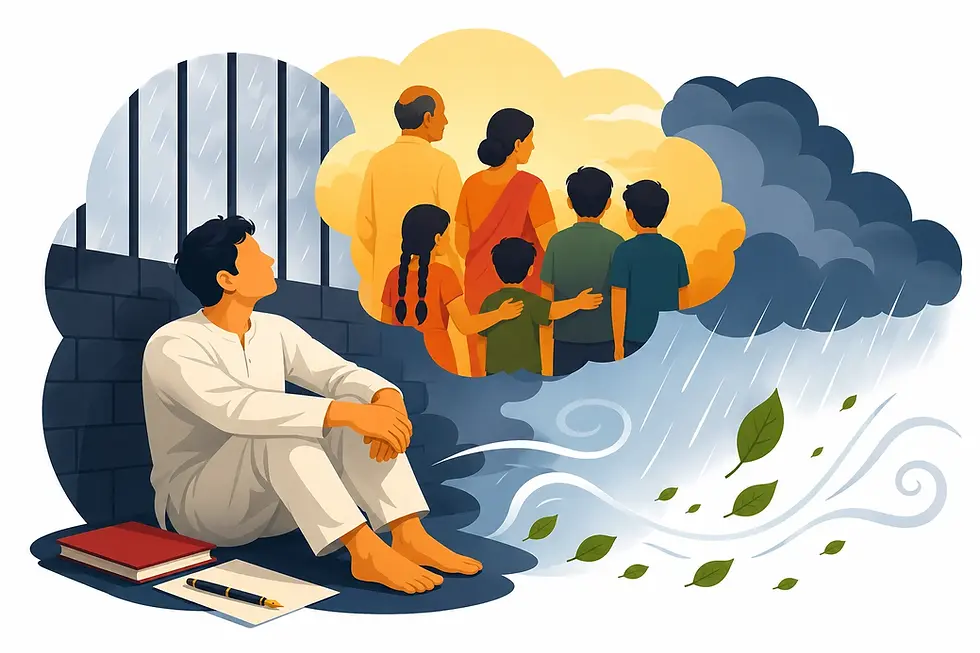
पद 1-2 (वर्षा और घर की स्मृति): जेल में बहुत तेज़ बारिश हो रही है। लगातार गिरते पानी को देखकर कवि के मन और प्राणों में अपने घर की यादें (स्मृतियाँ) घिरने लगती हैं। कवि का घर खुशियों से भरा है, जो इस समय उससे बहुत दूर है।
(It is raining heavily in the jail. Seeing the continuous rain, memories of his home start surrounding the poet's mind and soul. The poet's home is full of happiness, which is very far from him right now.)
पद 3-4 (भाई-बहन का प्रेम): कवि बताता है कि उसके घर में चार भाई और चार बहनें हैं। विवाहित बहनें जब मायके (पिता के घर) आई होंगी, तो अपने पाँचवें भाई (कवि) को जेल में पाकर वह घर उनके लिए 'परिताप का घर' (अत्यधिक दुख का घर) बन गया होगा। भाई भुजाओं के समान रक्षक हैं और बहनें प्यार का प्रतीक हैं।
(The poet tells that he has four brothers and four sisters at home. When the married sisters must have come to their maternal home, finding their fifth brother (the poet) in jail, that house must have become a 'house of extreme sorrow' (Paritap ka ghar) for them. Brothers are like protective arms and sisters are symbols of love.)
पद 5-6 (माँ की ममता): कवि अपनी अनपढ़ लेकिन ममतामयी माँ को याद करता है। माँ का स्नेह इतना गहरा है कि उसकी ममता की धारा जेल तक भी पहुँच रही है। वह अनपढ़ है, इसलिए कवि को पत्र नहीं लिख सकती, लेकिन माँ की गोद में सिर रखने से सारे दुख दूर हो जाते हैं।
(The poet remembers his unlettered but affectionate mother. The mother's love is so deep that the stream of her affection reaches even the jail. She is uneducated, hence cannot write letters to the poet, but resting the head on the mother's lap takes away all sorrows.)
पद 7-10 (पिताजी का सशक्त और भावुक व्यक्तित्व): कवि के पिताजी बूढ़े हैं, लेकिन उनमें युवाओं जैसी ऊर्जा है। वे मौत और शेर से भी नहीं डरते, उनकी आवाज़ में बादलों जैसी गर्जना है। वे रोज़ गीता-पाठ करते हैं और 260 दंड पेलते हैं। परंतु, जब वे कसरत करके नीचे आए होंगे और अपने चार बेटों-बेटियों को देखा होगा, तो अपने पाँचवें बेटे (भवानी) को याद करके उनकी आँखें आंसुओं से भर गई होंगी।
(The poet's father is old, but he has the energy of youth. He is not afraid of death or a lion, his voice has the roar of clouds. He reads the Gita daily and does 260 push-ups (Dand). However, when he must have come down after exercising and seen his four sons and daughters, remembering his fifth son (Bhavani), his eyes must have filled with tears.)
पद 11-14 (माता-पिता का संवाद): कवि सोचता है कि उसे याद करके पिता रो पड़े होंगे। तब माँ ने उन्हें यह कहकर ढाढ़स बँधाया होगा कि भवानी आपके ही बताए हुए देशभक्ति के रास्ते (लीक) पर गया है। यदि वह देश के लिए जेल न जाता तो मेरी कोख को लजाता। माँ ने पिता से कहा होगा कि आप रोएंगे तो बाकी बच्चे भी रोने लगेंगे। पिता ने अपने आँसू छिपाते हुए कहा होगा कि मैं रो कहाँ रहा हूँ।
(The poet thinks that his father must have cried remembering him. Then the mother must have consoled him saying that Bhavani has followed the path of patriotism shown by you. If he hadn't gone to jail for the country, he would have shamed my womb. The mother must have told the father that if he cries, the other children will cry too. Hiding his tears, the father must have said that he isn't crying.)
पद 15-20 (सावन को संदेश): कवि सावन को अपना संदेशवाहक (दूत) बनाता है। वह सावन से कहता है कि तुम खूब बरसो, लेकिन मेरे माता-पिता की आँखों से आँसू न बरसने दो। सावन से कवि कहता है कि पिता को बताना कि मैं यहाँ मजे में हूँ, पढ़-लिख रहा हूँ, गांधी जी की तरह सूत कात रहा हूँ। मेरा वज़न 70 सेर है और मैं खूब खाता-खेलता हूँ।
(The poet makes the Sawan (rainy month) his messenger. He tells Sawan to rain heavily, but not let tears fall from his parents' eyes. The poet asks Sawan to tell his father that he is enjoying here, reading, writing, and spinning yarn like Gandhiji. His weight is 70 ser and he eats and plays a lot.)
पद 21-23 (सच्चाई छिपाने का आग्रह): अंत में कवि सावन को चेतावनी देता है कि गलती से भी पिताजी को उसकी असली हालत मत बता देना। यह मत कहना कि मैं रात-भर जागता हूँ, उदास रहता हूँ, लोगों से दूर भागता हूँ और डूबते सूर्य (अस्त) की तरह निराश हूँ। कवि चाहता है कि सावन होशियारी से बात करे ताकि पिता को कोई शक न हो।
(In the end, the poet warns Sawan not to tell his father his real condition even by mistake. Do not say that I stay awake all night, remain sad, run away from people, and am hopeless like a setting sun (Ast). The poet wants Sawan to speak cleverly so that the father doesn't suspect anything.)
शीर्षक की सार्थकता (Title Justification)
इस कविता का शीर्षक 'घर की याद' पूर्णतः सटीक है। सन् 1942 के भारत छोड़ो आंदोलन के दौरान जेल में बंद कवि जब सावन की बारिश देखता है, तो उसके मन में अपने घर, भाई-बहन, माता और पिता की स्मृतियाँ उभर आती हैं। पूरी कविता कारावास में परिवार से दूर होने की पीड़ा और घर की यादों के इर्द-गिर्द घूमती है, अतः यह शीर्षक सार्थक है।
The title of this poem 'Ghar Ki Yaad' (Memory of Home) is completely accurate. Confined in jail during the 1942 Quit India Movement, when the poet sees the Sawan rain, memories of his home, siblings, mother, and father emerge in his mind. The entire poem revolves around the pain of being away from family in prison and memories of home, hence this title is meaningful.
काव्य-सौंदर्य (Poetic Beauty)
भाव सौंदर्य (Emotional Beauty)
कविता में 'देशप्रेम' और 'पारिवारिक स्नेह' का अद्भुत समन्वय है। एक ओर कवि अपने परिवार (विशेषकर पिता) की जुदाई में तड़प रहा है (वियोग शृंगार और करुण रस), वहीं दूसरी ओर उसे देश के लिए जेल जाने का गर्व भी है। अपने दुख को छिपाकर माता-पिता को झूठी तसल्ली देने का भाव अत्यंत मार्मिक और संवेदनशील है।
(The poem has a wonderful coordination of 'Patriotism' and 'Familial Love'. On one hand, the poet is agonizing over separation from his family (especially father) (Viyog Shringar and Karun Ras), while on the other, he is proud of going to jail for the country. The sentiment of hiding his own sorrow to give false comfort to his parents is extremely poignant and sensitive.)
शिल्प सौंदर्य (Structural Beauty)
भाषा: बोलचाल की खड़ी बोली हिंदी, जो अत्यंत सहज और गद्यात्मक (Prose-like) है।
शैली: संवादात्मक (Conversational) और आत्मकथात्मक शैली। सावन को दूत (संदेशवाहक) बनाने की प्राचीन काव्य-परंपरा (मेघदूत के समान) का प्रयोग।
अलंकार:
उपमा: "वज्र-भुज नवनीत-सा उर" (मक्खन सा कोमल हृदय), "बड़ का झाड़ जैसे"।
पुनरुक्ति प्रकाश: "झरा-झर", "हरा-हर", "सर-सर", "थर-थर", "खोल-खोल"।
अनुप्रास: "पानी गिर रहा है, प्राण मन घिर रहा है" (र और म वर्ण)।
रूपक: "स्नेह-धारा" (स्नेह रूपी धारा)।
बिंब (Imagery): वर्षा का दृश्य बिंब और श्रव्य बिंब (झरा-झर, सर-सर) बहुत सजीव है।
केंद्रीय भाव एवं मूल्य (Central Theme & Values)
5A. विषय-वस्तु तालिका (Themes Table)
विषय (Theme) | कविता में स्पष्टीकरण (Explanation in Text) |
मुख्य विषय: घर की स्मृति और विरह-पीड़ा | सावन की झड़ी देखकर जेल में बंद कवि को अपने खुशहाल घर और माता-पिता की याद सताती है। |
पारिवारिक जुड़ाव | भाइयों को 'भुजा' और बहनों को 'प्यार' कहकर संयुक्त परिवार की शक्ति और प्रेम को दर्शाया गया है। |
देशभक्ति और बलिदान | "पाँव जो पीछे हटाता, कोख को मेरी लजाता"—यह पंक्ति मातृभूमि के प्रति समर्पण को दिखाती है। |
भावनाओं को छिपाना (त्याग) | अपने माता-पिता को दुखी न करने के लिए कवि सावन से अपनी वास्तविक निराशा और कष्ट छिपाने को कहता है। |
5B. मानवीय मूल्य (Human Values)
देशप्रेम (Patriotism): परिवार के सुख को त्याग कर देश की आज़ादी के लिए हँसते-हँसते जेल जाना।
(Sacrificing family happiness and happily going to jail for the country's freedom.)
संवेदनशीलता (Sensitivity): जेल में खुद तड़पते हुए भी यह सोचना कि मेरे रोने या दुखी होने से मेरे पिता को कितना कष्ट होगा।
(Thinking that my crying or sorrow will cause pain to my father, even while suffering in jail oneself.)
मातृ-पितृ भक्ति (Filial Piety): पिता को 'स्वर्ण' के समान आदर देना और उनकी हर खुशी का ध्यान रखना।
(Respecting the father like 'gold' and taking care of his every happiness.)
शब्दार्थ (Vocabulary)
क्र. | शब्द/पद | हिंदी अर्थ | English Meaning |
1 | परिताप | अत्यधिक दुख / संताप | Extreme sorrow / Anguish |
2 | नवनीत | ताज़ा मक्खन | Fresh butter |
3 | वज्र | बहुत कठोर | Extremely hard / Thunderbolt |
4 | उर | हृदय / दिल | Heart |
5 | झंझा | तेज़ हवा / आँधी | Storm / Gale |
6 | लरजना | काँपना / हिलना | To shiver / To shake |
7 | मूठ | मुट्ठी-भर चीज़ / दस्ता | Handle / Grip |
8 | अभागा | भाग्यहीन | Unlucky / Unfortunate |
9 | धीर | धैर्य / शांति | Patience / Composure |
10 | झारी | टोटीदार बर्तन (पानी का) | Spout pot |
11 | निहायत | बहुत ज़्यादा / अत्यधिक | Very much / Extremely |
12 | लुनाई | सुंदरता / सलोनापन | Beauty / Charm |
13 | क्षितिज | जहाँ धरती-आकाश मिलते दिखें | Horizon |
14 | तृषा | तीव्र इच्छा / प्यास | Thirst / Strong desire |
15 | क्लेश | दुख / पीड़ा | Pain / Sorrow |
16 | उमग | उल्लास / मौज | Joy / Surge of emotion |
17 | विरस | नीरस / अप्रिय / कष्टकर | Dry / Unpleasant / Painful |
18 | कातना | चरखे पर सूत (धागा) बनाना | To spin yarn |
19 | अस्त | डूबना / निराश होना | Setting (sun) / Hopeless |
20 | सुहागा | एक प्राकृतिक रसायन (सोने को निखारने वाला) | Borax (used to purify gold) |
काव्यांश आधारित प्रश्न (Extract-Based Questions)
Extract 1
"आज पानी गिर रहा है, बहुत पानी गिर रहा है,रात-भर गिरता रहा है, प्राण मन घिरता रहा है,बहुत पानी गिर रहा है, घर नजर में तिर रहा है,घर कि मुझसे दूर है जो, घर खुशी का पूर है जो।"
Q1. कवि 'प्राण मन घिरता रहा है' के माध्यम से क्या कहना चाहता है?
(A) जेल में अँधेरा हो गया है
(B) उसे फाँसी की सज़ा होने वाली है
(C) लगातार बारिश के कारण उसके मन और प्राणों में घर की स्मृतियाँ (यादें) घिर आई हैं
(D) वह बीमार है
उत्तर: (C) — बाहर पानी बरसने के साथ-साथ कवि के मन में उसके सुखद घर की यादें उमड़-घुमड़ कर उसे घेर रही हैं।
(With the rain falling outside, memories of his happy home are swelling up and surrounding the poet's mind.)
Q2. कवि का घर कैसा है?
(A) बहुत बड़ा और आलीशान है
(B) टूटा-फूटा है
(C) वह खुशियों से भरा हुआ (खुशी का पूर) है
(D) वह जेल के पास है
उत्तर: (C) — कवि बताता है कि उसका घर 'खुशी का पूर' (खुशियों से भरा हुआ) है, जहाँ सभी लोग आपस में प्रेम से जुड़े हैं।
(The poet tells that his house is a 'flood of happiness' (full of joy) where everyone is connected with love.)
Q3. 'घर नजर में तिर रहा है' पंक्ति में कौन-सा भाव निहित है?
उत्तर: इस पंक्ति में घर से दूर होने की विरह-पीड़ा (वियोग) का भाव निहित है। कवि की आँखों के सामने उसके घर और परिजनों का चित्र तैर रहा है।
(This line contains the emotion of pain of separation from home. The picture of his home and family members is floating before the poet's eyes.)
Q4. इस पद्यांश में पानी गिरने की आवृत्ति (लगातार पानी गिरना) किसका प्रतीक है?
उत्तर: पानी का लगातार गिरना केवल प्राकृतिक वर्षा का ही नहीं, बल्कि कवि के हृदय की गहरी उदासी और आँखों से बहने वाले आंसुओं का भी प्रतीक है।
(The continuous falling of rain is a symbol not only of natural rain but also of the deep sadness of the poet's heart and the tears flowing from his eyes.)
Extract 2
"पिताजी जिनको बुढ़ापा, एक क्षण भी नहीं व्यापा,जो अभी भी दौड़ जाएँ, जो अभी भी खिलखिलाएँ,मौत के आगे न हिचकें, शेर के आगे न बिचकें,बोल में बादल गरजता, काम में झंझा लरजता।"
Q1. कवि के पिताजी की सबसे बड़ी शारीरिक विशेषता क्या है?
(A) वे बहुत कमज़ोर हैं
(B) बुढ़ापा आने पर भी उनमें युवाओं जैसी ऊर्जा, फुर्ती और उत्साह है
(C) वे हमेशा बीमार रहते हैं
(D) वे बहुत धीरे बोलते हैं
उत्तर: (B) — उम्र से बूढ़े होने के बावजूद उन पर बुढ़ापा हावी नहीं हुआ है; वे दौड़ सकते हैं और ज़ोर से हँसते हैं।
(Despite being old in age, old age has not overpowered him; he can run and laughs loudly.)
Q2. 'बोल में बादल गरजता, काम में झंझा लरजता' पंक्ति में कौन-सा अलंकार है?
(A) अनुप्रास
(B) यमक
(C) उपमा और रूपक
(D) श्लेष
उत्तर: (C) — इस पंक्ति में आवाज़ को बादलों की गर्जना और काम की गति को तूफान (झंझा) के समान बताया गया है।
(In this line, the voice is compared to the roar of clouds and the speed of work to a storm (Jhanjha).
Q3. पिताजी किन चीज़ों से नहीं डरते?
उत्तर: कवि के पिताजी अत्यंत साहसी और निडर हैं; वे न तो मौत के सामने हिचकिचाते हैं और न ही किसी शेर (भयानक संकट) के सामने घबराते हैं।
(The poet's father is extremely courageous and fearless; he neither hesitates before death nor panics before a lion (terrible crisis).)
Q4. कवि ने अपने पिताजी का ऐसा वर्णन क्यों किया है?
उत्तर: कवि ने यह वर्णन यह दर्शाने के लिए किया है कि जो पिता शारीरिक और मानसिक रूप से इतने कठोर (शेर जैसे) हैं, वे भी अपने बेटे की याद में अंदर से टूटकर रो पड़े होंगे।
(The poet has given this description to show that a father who is physically and mentally so tough (like a lion), even he must have broken down and cried from inside remembering his son.)
लघु उत्तरीय प्रश्न (Short Answer Questions)
प्र1. मायके आई बहन के लिए कवि ने घर को 'परिताप का घर' क्यों कहा है? (घटना का महत्व)
मुख्य बिंदु 1 (VP1): बहन का मायके आना खुशियों के लिए था। (Sister coming to maternal home was for happiness).
मुख्य बिंदु 2 (VP2): जेल में भाई का होना दुख का कारण बना। (Brother being in jail became the reason for sorrow).
उत्तर: विवाहित बहनें जब भी मायके (पिता के घर) आती हैं, तो अपने भाई-बहनों से मिलकर बहुत खुश होती हैं। परंतु जब कवि की बहन घर आई होगी, तो उसने अपने प्यारे पाँचवें भाई (कवि) को घर में न पाकर (क्योंकि वह जेल में था) बहुत दुख महसूस किया होगा। इसलिए वह खुशी का घर उसके लिए 'परिताप' (भारी दुख) का घर बन गया होगा।
(Married sisters are very happy to meet their siblings whenever they come to their maternal home. But when the poet's sister must have come home, not finding her beloved fifth brother (the poet) at home (because he was in jail), she must have felt very sad. Therefore, that house of happiness must have become a house of 'Paritap' (heavy sorrow) for her.)
प्र2. 'वज्र-भुज नवनीत-सा उर' पंक्ति के माध्यम से पिता के व्यक्तित्व की कैसी छवि प्रस्तुत की गई है? (पात्र प्रेरणा)
मुख्य बिंदु 1 (VP1): वज्र-भुज: शारीरिक मज़बूती और कठोरता। (Vajra-bhuj: Physical strength and toughness).
मुख्य बिंदु 2 (VP2): नवनीत-सा उर: हृदय मक्खन जैसा कोमल और भावुक। (Navneet-sa ur: Heart soft and emotional like butter).
उत्तर: इस पंक्ति के माध्यम से कवि ने अपने पिता के बहुआयामी व्यक्तित्व को उभारा है। बाहर से उनके पिता की भुजाएँ (शरीर) 'वज्र' के समान कठोर और शक्तिशाली हैं (वे दंड पेलते हैं, शेर से नहीं डरते)। परंतु भीतर से उनका हृदय (उर) 'नवनीत' (ताज़े मक्खन) के समान अत्यंत कोमल और भावुक है, जो बेटे की याद में तुरंत पिघलकर आंसुओं में बह निकलता है।
(Through this line, the poet has highlighted the multi-dimensional personality of his father. From the outside, his father's arms (body) are hard and powerful like a 'Vajra' (he exercises, doesn't fear lions). But from the inside, his heart (Ur) is extremely soft and emotional like 'Navneet' (fresh butter), which immediately melts and flows into tears remembering his son.)
प्र3. कवि अपनी माँ की स्नेह-धारा का वर्णन किस प्रकार करता है? (अनुमान/निष्कर्ष)
मुख्य बिंदु 1 (VP1): माँ का अनपढ़ होना। (Mother being uneducated).
मुख्य बिंदु 2 (VP2): जेल की दूरी तक स्नेह का पहुँचना। (Affection reaching the distance of the jail).
उत्तर: कवि बताता है कि उसकी माँ भले ही अनपढ़ (बिन-पढ़ी) है और उसे पत्र लिखना नहीं आता, लेकिन उसका हृदय वात्सल्य से भरा हुआ है। माँ के प्यार (स्नेह-धारा) का फैलाव इतना असीम है कि कवि को जेल की इस काल-कोठरी में भी माँ की ममता की गर्माहट महसूस होती है और मानसिक रूप से उसकी गोद में सिर रखकर कवि के सारे दुख मिट जाते हैं।
(The poet says that even though his mother is uneducated and cannot write letters, her heart is full of maternal love. The spread of the mother's love (stream of affection) is so boundless that the poet feels the warmth of his mother's affection even in this dark dungeon of the jail, and mentally resting his head in her lap, all his sorrows vanish.)
प्र4. कवि सावन को 'पुण्य पावन' कहकर उससे क्या प्रार्थना करता है? (कवि की भावना)
मुख्य बिंदु 1 (VP1): सावन को संदेशवाहक बनाना। (Making Sawan the messenger).
मुख्य बिंदु 2 (VP2): माता-पिता को कवि के दुख से अनभिज्ञ रखना। (Keeping parents unaware of the poet's sorrow).
उत्तर: कवि सावन को 'पवित्र और परोपकारी' (पुण्य पावन) मानता है। वह सावन से प्रार्थना करता है कि तुम चाहे जितना भी बरसो, लेकिन मेरे माता-पिता की आँखों से आँसू मत बरसने देना। कवि सावन से आग्रह करता है कि वह जाकर माता-पिता को झूठी तसल्ली दे कि मैं जेल में बहुत मस्त हूँ, ताकि उन्हें मेरे पाँचवें भाई होने की कमी का दुख न सताए।
(The poet considers Sawan 'holy and benevolent' (Punya pawan). He prays to Sawan that no matter how much you rain, do not let tears rain from my parents' eyes. The poet requests Sawan to go and falsely comfort his parents that he is very happy in jail, so they don't suffer the pain of missing their fifth son.)
प्र5. 'पाँव जो पीछे हटाता, कोख को मेरी लजाता'—माँ के इस कथन का क्या आशय है? (मूल्यपरक)
मुख्य बिंदु 1 (VP1): देशप्रेम का पारिवारिक प्रेम से उच्च होना। (Patriotism being higher than familial love).
मुख्य बिंदु 2 (VP2): स्वतंत्रता संग्राम में बेटे की भागीदारी पर माँ का गर्व। (Mother's pride in son's participation in freedom struggle).
उत्तर: जब पिता कवि को याद करके रोए होंगे, तब माँ ने यह वाक्य कहा होगा। इसका आशय है कि भवानी ने देश की आज़ादी के लिए जेल जाकर एक वीर पुत्र का कर्त्तव्य निभाया है। यदि वह अंग्रेज़ों से डरकर अपने कदम (पाँव) पीछे खींच लेता, तो एक वीर माता की कोख को लज्जित (शर्मिंदा) करता। यह कथन माँ की भावनात्मक मज़बूती और राष्ट्रप्रेम को दर्शाता है।
(When the father must have cried remembering the poet, the mother must have said this sentence. It means that Bhavani has fulfilled the duty of a brave son by going to jail for the country's freedom. If he had stepped back out of fear of the British, he would have shamed the womb of a brave mother. This statement shows the emotional strength and patriotism of the mother.)
दीर्घ उत्तरीय प्रश्न (Long Answer Questions)
प्र1. 'और कहना मस्त हूँ मैं... यों न कहना अस्त हूँ मैं'—इन पंक्तियों के आधार पर बताइए कि कठिन परिस्थितियों में कवि किस प्रकार धैर्य, साहस और त्याग का परिचय देता है? वह अपने परिजनों से सच्चाई क्यों छिपाना चाहता है? (केंद्रीय भाव एवं संदेश)
मुख्य बिंदु 1 (VP1): जेल की कठोर वास्तविकता (पीड़ा, अनिद्रा, अकेलापन)। (Harsh reality of jail (pain, insomnia, loneliness)).
मुख्य बिंदु 2 (VP2): झूठी खुशी का आवरण (वज़न बढ़ना, सूत कातना, मजे में होना)। (Cover of false happiness (gaining weight, spinning yarn, having fun)).
मुख्य बिंदु 3 (VP3): माता-पिता को मानसिक आघात से बचाना (त्याग)। (Saving parents from mental trauma (sacrifice)).
मुख्य बिंदु 4 (VP4): स्वयं घोर दुख सहकर दूसरों को सांत्वना देना। (Suffering extreme sorrow oneself to console others).
उत्तर:
'घर की याद' कविता में कवि भवानीप्रसाद मिश्र का चरित्र एक अत्यंत संवेदनशील और त्यागी पुत्र का है। जेल का जीवन किसी भी व्यक्ति के लिए कष्टदायक होता है। कवि स्वयं अंदर से टूट चुका है; उसे रातों को नींद नहीं आती, वह मौन रहता है, लोगों से कटने लगा है और उसका आत्मविश्वास एक डूबते सूरज (अस्त) की तरह गिर रहा है।
परंतु, कवि अपने इस भीषण दुख को अपने माता-पिता के सामने प्रकट नहीं होने देना चाहता। यह उसका 'त्याग' है। वह सावन (दूत) को हिदायत देता है कि वह घर जाकर बताए कि कवि जेल में मस्त है, उसका वज़न 70 सेर हो गया है, वह खूब खाता-पीता है और गांधी जी की तरह सूत कातने में व्यस्त है। कवि यह सच्चाई इसलिए छिपाना चाहता है क्योंकि वह जानता है कि उसके बूढ़े और भावुक माता-पिता इस सच्चाई को सहन नहीं कर पाएँगे और चिंता में घुल जाएँगे। अपने माता-पिता के चेहरों पर मुस्कान बनाए रखने के लिए अपने स्वयं के असीम कष्टों को पी जाना ही कवि के सच्चे साहस, धैर्य और गहरे पारिवारिक प्रेम का प्रतीक है।
(In the poem 'Ghar Ki Yaad', the character of poet Bhavani Prasad Mishra is that of an extremely sensitive and sacrificing son. Jail life is painful for anyone. The poet himself is broken from inside; he cannot sleep at night, remains silent, avoids people, and his self-confidence is falling like a setting sun (Ast).
However, the poet does not want to reveal this terrible sorrow to his parents. This is his 'sacrifice'. He instructs Sawan (messenger) to go home and tell them that the poet is happy in jail, his weight is 70 ser, he eats and drinks well, and is busy spinning yarn like Gandhiji. The poet wants to hide this truth because he knows that his old and emotional parents will not be able to bear this truth and will wither in worry. Swallowing his own boundless suffering to maintain a smile on his parents' faces is the symbol of the poet's true courage, patience, and deep familial love.)
प्र2. कविता में वर्णित पिता के व्यक्तित्व की उन विशेषताओं का वर्णन कीजिए जिनसे उनका बहुआयामी (Multi-dimensional) रूप सामने आता है। (चरित्र चित्रण)
मुख्य बिंदु 1 (VP1): असीम शारीरिक ऊर्जा (बुढ़ापे का प्रभाव नहीं)। (Limitless physical energy (no impact of old age)).
मुख्य बिंदु 2 (VP2): निडरता और तेजस्विता (शेर और मौत से न डरना)। (Fearlessness and brilliance (not fearing lion or death)).
मुख्य बिंदु 3 (VP3): धार्मिक प्रवृत्ति और अनुशासन (गीता-पाठ और कसरत)। (Religious nature and discipline (Gita reading and exercise)).
मुख्य बिंदु 4 (VP4): हृदय की कोमलता और अत्यधिक भावुकता (बेटे के लिए रोना)। (Softness of heart and extreme emotionality (crying for the son)).
उत्तर:
भवानीप्रसाद मिश्र ने कविता में अपने पिता का अत्यंत सजीव, प्रेरणादायक और बहुआयामी (कई पहलुओं वाला) चित्र प्रस्तुत किया है। उनके पिता का व्यक्तित्व शारीरिक कठोरता और मानसिक कोमलता का एक अनूठा संगम है।
शारीरिक रूप से वे अत्यंत बलिष्ठ और ऊर्जावान हैं। हालाँकि वे उम्र में बूढ़े हो चुके हैं, फिर भी बुढ़ापे ने उनके शरीर या मन को नहीं छुआ है (बुढ़ापा एक क्षण भी नहीं व्यापा)। वे आज भी दौड़ सकते हैं, ज़ोर-ज़ोर से खिलखिला कर हँस सकते हैं। वे मौत और शेर जैसी भयंकर विपत्तियों के आगे भी कभी नहीं घबराते। उनकी आवाज़ में बादलों जैसी गर्जना है और उनके काम करने की गति तूफान (झंझा) के समान तेज़ है। वे बहुत अनुशासित हैं; रोज़ गीता का पाठ करते हैं और 260 दंड पेलकर मुगदर घुमाते हैं।
इतने वीर, कठोर और शक्तिशाली होने के बावजूद, भावनात्मक स्तर पर वे एक सामान्य और लाचार पिता हैं। उनका हृदय मक्खन (नवनीत) के समान कोमल है। जब वे अपने चार बेटों को सामने देखते हैं, तो अपने जेल में बंद पाँचवें बेटे (भवानी) को याद करके उनकी आँखें भर आती हैं और वे फूट-फूट कर रोने लगते हैं। पिता का यह रूप सिद्ध करता है कि एक मज़बूत शरीर के भीतर भी एक अत्यंत भावुक और ममतामयी हृदय बसता है।
(Bhavani Prasad Mishra has presented a very lively, inspiring, and multi-dimensional (many-faceted) picture of his father in the poem. His father's personality is a unique confluence of physical toughness and mental softness.
Physically, he is extremely strong and energetic. Although he has grown old in age, old age has not touched his body or mind (Budhapa ek kshan bhi nahi vyapa). He can still run, laugh loudly. He never panics even before terrible adversities like death and lions. His voice has the roar of clouds and his working speed is as fast as a storm (Jhanjha). He is very disciplined; reads the Gita daily and swings the Mugdar doing 260 pushups.
Despite being so brave, tough, and powerful, on an emotional level, he is a normal and helpless father. His heart is as soft as butter (Navneet). When he sees his four sons in front of him, remembering his fifth son (Bhavani) confined in jail, his eyes fill up and he starts weeping bitterly. This form of the father proves that even inside a strong body resides a highly emotional and affectionate heart.)
Scroll down to Download thw Premium PDF
About BhashaLab
BhashaLab is a dynamic platform dedicated to the exploration and mastery of languages - operating both online and offline. Aligned with the National Education Policy (NEP) 2020 and the National Credit Framework (NCrF), we offer language education that emphasizes measurable learning outcomes and recognized, transferable credits.
We offer:
1. NEP alligned offline language courses for degree colleges - English, Sanskrit, Marathi and Hindi
2. NEP alligned offline language courses for schools - English, Sanskrit, Marathi and Hindi
3. Std VIII, IX and X - English and Sanskrit Curriculum Tuitions - All boards
4. International English Olympiad Tuitions - All classes
5. Basic and Advanced English Grammar - Offline and Online - Class 3 and above
6. English Communication Skills for working professionals, adults and students - Offline and Online
Contact: +91 86577 20901, +91 97021 12044
Mail: info@bhashalab.com
Website: www.bhashalab.com


Comments