

2. क्या लिखूँ? - Kya Likhoon? - Class 9 - Ganga
- Jun 2
- 13 min read
Updated: Jun 5
पाठ परिचय (Chapter)
पाठ का नाम: क्या लिखूँ?
लेखक: पदुमलाल पुन्नालाल बख्शी
विधा: निबंध / लेख
पाठ्यपुस्तक: गंगा — NCERT कक्षा 9 हिंदी, R1, 2026-27
लेखक परिचय (Author Introduction)
पदुमलाल पुन्नालाल बख्शी का जन्म सन् 1894 में खैरागढ़ (छत्तीसगढ़) में हुआ था। वे हिंदी साहित्य में एक कुशल आलोचक, कवि और निबंधकार के रूप में प्रसिद्ध हैं। इनकी प्रमुख रचनाओं में 'पंच-पात्र', 'पद्म-वन', 'कुछ बिखरे पन्ने' (निबंध संग्रह) तथा 'झलमला' (कहानी संग्रह) शामिल हैं। बख्शी जी ने 'सरस्वती' और 'छाया' जैसी पत्रिकाओं का संपादन भी किया। उनके निबंधों में लोकजीवन, समाज-सुधार और साहित्य-सिद्धांतों का तार्किक विश्लेषण देखने को मिलता है।
Padumlal Punnalal Bakshi was born in 1894 in Khairagarh (Chhattisgarh). He is famous in Hindi literature as a skilled critic, poet, and essayist. His major works include essay collections like 'Panch-Patra', 'Padm-Van', and 'Kuch Bikhre Panne'. He also edited magazines like 'Saraswati' and 'Chhaya'. His essays logically analyze rural life, social reform, and literary principles.
परीक्षा टिप / Exam Tip:निबंधकार के रूप में पदुमलाल पुन्नालाल बख्शी का परिचय 5 अंकों के प्रश्न में आता है। इनकी पत्रिकाओं ('सरस्वती') और निबंध शैली (आत्मपरक/विचारात्मक) का उल्लेख अवश्य करें।(As an essayist, Bakshi ji's introduction appears as a 5-mark question. Make sure to mention his edited magazines like 'Saraswati' and his subjective writing style.)
पाठ का सारांश (Chapter Summary)
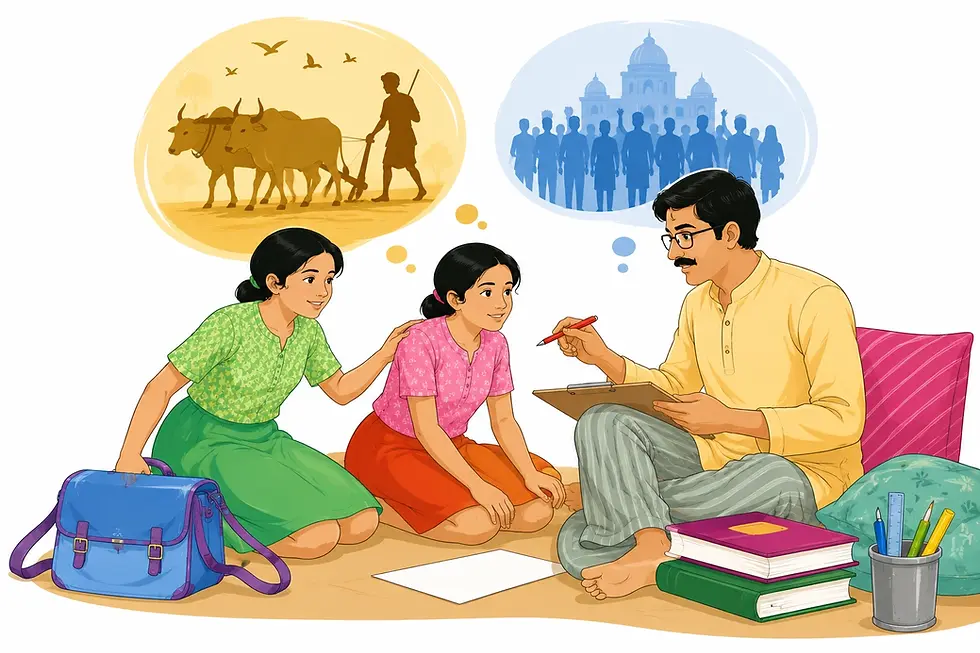
'क्या लिखूँ?' एक रोचक और विचारात्मक निबंध है जिसमें लेखक ने निबंध की रचना-प्रक्रिया को समझाया है। लेखक को नमिता के लिए 'दूर के ढोल सुहावने होते हैं' और अमिता के लिए 'समाज-सुधार' पर आदर्श निबंध लिखने हैं। इस कठिन कार्य के लिए लेखक निबंधशास्त्र के विद्वानों के विचारों का स्मरण करते हैं। वे ए.जी. गार्डिनर के इस विचार का उल्लेख करते हैं कि लिखने के लिए विषय से अधिक लेखक की 'विशेष मानसिक स्थिति' (उमंग और स्फूर्ति) महत्वपूर्ण होती है। इसके बाद वे अंग्रेजी निबंधकार मानटेन की पद्धति को अपनाते हैं, जिसके अनुसार निबंध लेखक की सच्ची अनुभूति और स्वच्छंद भावों की अभिव्यक्ति होनी चाहिए।
अंततः, लेखक अमीर खुसरो की एक कहानी से प्रेरणा लेकर दोनों विषयों को एक ही निबंध में पिरो देते हैं। वे बताते हैं कि जिस प्रकार दूर बजने वाले ढोल की कर्कश आवाज़ भी मधुर लगती है, उसी प्रकार दूर की चीज़ें (भविष्य और अतीत) मनुष्य को आकर्षित करती हैं। युवा पीढ़ी भविष्य के सुनहरे सपने देखती है, जबकि वृद्ध पीढ़ी अपने अतीत के गौरव में जीती है। दोनों ही पीढ़ियाँ वर्तमान से असंतुष्ट रहती हैं। युवाओं और वृद्धों के इस वैचारिक टकराव के कारण ही वर्तमान हमेशा क्षुब्ध रहता है और समाज में निरंतर सुधारों की आवश्यकता बनी रहती है।
‘Kya Likhoon?’ is an interesting essay explaining the essay-writing process. The author is tasked with writing on 'Distant drums sound sweet' for Namita and 'Social reform' for Amita. He recalls A.G. Gardiner's view that a special mental state (enthusiasm) is more important for writing than the topic itself. He then adopts Montaigne's method, which emphasizes expressing true personal experiences and free-flowing emotions. Inspired by a tale of Amir Khusro, he brilliantly weaves both topics into a single essay. He explains that just as harsh drumbeats sound sweet from afar, distant phases of life (future and past) attract humans. The youth dream of a bright future, while the elderly cherish past glory. Both are dissatisfied with the present. This ideological clash between generations keeps the present turbulent, making social reform a continuous necessity.
शीर्षक की सार्थकता (Title Justification)
निबंध का शीर्षक 'क्या लिखूँ?' पूरी तरह से सार्थक और सटीक है क्योंकि यह उस मानसिक उलझन और चिंतन को दर्शाता है जिससे एक लेखक गुज़रता है। यह प्रश्नात्मक शीर्षक पाठकों में उत्सुकता जगाता है और निबंध-लेखन की पूरी प्रक्रिया को बेहद स्वाभाविक ढंग से प्रस्तुत करता है।
The title 'Kya Likhoon?' (What Should I Write?) is completely justified and accurate as it reflects the mental dilemma and contemplation a writer goes through. This questioning title arouses curiosity in readers and presents the entire essay-writing process in a very natural way.
लेखक की दृष्टि (Author's Perspective)
निबंध की केंद्रीय विचार-बिंदु
लेखक का मुख्य विचार यह है कि श्रेष्ठ निबंध तथ्यों या भारी-भरकम शब्दों का भंडार नहीं होता, बल्कि वह लेखक की सच्ची अनुभूति और भावों की स्वाभाविक अभिव्यक्ति होता है। इसके अतिरिक्त, लेखक ने मनोवैज्ञानिक दृष्टि से स्पष्ट किया है कि मनुष्य की असंतुष्टि ही समाज में निरंतर बदलाव और सुधारों का मूल कारण है।
The author's main perspective is that a great essay is not a repository of facts or heavy words, but a natural expression of the writer's true feelings and experiences. Additionally, the author clarifies psychologically that human dissatisfaction is the root cause of continuous change and reforms in society.
केंद्रीय भाव एवं मूल्य (Central Theme & Values)
5A. विषय-वस्तु तालिका (Themes Table)
विषय (Theme) | पाठ में स्पष्टीकरण (Explanation in Text) |
मुख्य विषय: निबंध की रचना-प्रक्रिया | एक आदर्श निबंध विषय पर नहीं, बल्कि लेखक के मनोभावों, सच्ची अनुभूति और स्वच्छंद शैली पर निर्भर करता है। |
पीढ़ियों का वैचारिक अंतर | तरुण भविष्य की ओर देखते हैं और वृद्ध अतीत की ओर, जिसके कारण दोनों वर्तमान से असंतुष्ट रहते हैं। |
दूर के ढोल सुहावने | दूर की वस्तुएँ या स्थितियाँ आकर्षक लगती हैं क्योंकि पास जाने पर ही उनकी यथार्थता और कठोरता का ज्ञान होता है। |
समाज-सुधार की निरंतरता | समय के साथ दोष उत्पन्न होते हैं और सुधार किए जाते हैं। जो कल सुधार था, वह भविष्य में दोष बन सकता है। |
5B. मानवीय मूल्य (Human Values)
सत्यनिष्ठा और अनुभूति (Authenticity and Experience): मानटेन की तरह लेखक भी मानता है कि लेखन में दिखावा नहीं, बल्कि सच्ची अनुभूति और सत्य होना चाहिए।
(Like Montaigne, the author believes that writing should not be pretentious, but full of true experience and truth.)
प्रगतिशीलता (Progressiveness): समाज में दोषों को पहचानना और बुद्ध, कबीर, महात्मा गांधी की तरह निरंतर सुधार के लिए प्रयास करना आवश्यक है।
(It is necessary to identify societal flaws and continuously strive for reform, just like Buddha, Kabir, and Mahatma Gandhi.)
यथार्थ का ज्ञान (Acceptance of Reality): अतीत या भविष्य के ख्यालों में खोए रहने के बजाय वर्तमान की कठोर सच्चाई को समझना चाहिए।
(Instead of being lost in thoughts of the past or future, one must understand the harsh realities of the present.)
शब्दार्थ (Vocabulary)
क्र. | शब्द/पद | हिंदी अर्थ | English Meaning |
1 | स्फूर्ति | उत्तेजना / फुरती | Energy / Agility |
2 | आवेग | अंतःप्रेरणा / झोंक | Impulse / Surge of emotion |
3 | यथार्थता | सत्य / वास्तविकता | Reality / Truth |
4 | उत्थित | उत्पन्न / उठा हुआ | Arisen / Generated |
5 | विज्ञ | जानकार / विद्वान | Scholar / Expert |
6 | सम्मति | राय / मत / स्वीकृति | Opinion / Consent |
7 | अनुसंधान | खोज / जाँच-पड़ताल | Research / Investigation |
8 | दुर्बोधता | जो शीघ्र समझ में न आए / गूढ़ | Incomprehensibility / Obscurity |
9 | गांभीर्य | गंभीरता / गहराई | Seriousness / Depth |
10 | अज्ञ | ज्ञानरहित / नासमझ | Ignorant / Unknowing |
11 | पद्धति | प्रणाली / परिपाटी | Method / System |
12 | आख्यायिका | कथा / कहानी | Story / Tale |
13 | उदात्त | ऊँचा / महान / श्रेष्ठ | Noble / Sublime |
14 | अभिव्यक्ति | प्रकट करना | Expression |
15 | कोलाहल | शोर / हंगामा | Uproar / Clamor |
16 | विषाद | उदासी / अवसाद | Sorrow / Melancholy |
17 | कलरव | मधुर ध्वनि | Sweet sound / Chirping |
18 | तरुण | युवा / नौजवान | Youth |
19 | क्षुब्ध | अशांत / परेशान | Agitated / Disturbed |
20 | गुत्थी | उलझन / गाँठ | Entanglement / Puzzle |
गद्यांश आधारित प्रश्न (Extract-Based Questions)
Extract 1
"अंग्रेजी के प्रसिद्ध निबंध लेखक ए.जी. गार्डिनर का कथन है कि लिखने की एक विशेष मानसिक स्थिति होती है। उस समय मन में कुछ ऐसी उमंग-सी उठती है, हृदय में कुछ ऐसी स्फूर्ति-सी आती है, मस्तिष्क में कुछ ऐसा आवेग-सा उत्पन्न होता है कि लेख लिखना ही पड़ता है। उस समय विषय की चिंता नहीं रहती। कोई भी विषय हो, उसमें हम अपने हृदय के आवेग को भर ही देते हैं। हैट टाँगने के लिए कोई भी खूँटी काम दे सकती है। उसी तरह अपने मनोभावों को व्यक्त करने के लिए कोई भी विषय उपयुक्त है।"
Q1. ए.जी. गार्डिनर के अनुसार लेख लिखने के लिए सबसे अधिक क्या आवश्यक है? (A) एक अच्छा और सरल विषय (B) शब्दकोश और संदर्भ ग्रंथ (C) लेखक की विशेष मानसिक स्थिति और उमंग (D) निबंधशास्त्र का ज्ञान
उत्तर: (C) — बिना आंतरिक प्रेरणा और उमंग के श्रेष्ठ लेख नहीं लिखा जा सकता। (Without internal inspiration and enthusiasm, a great article cannot be written.)
Q2. गद्यांश में 'हैट' किस बात का प्रतीक है? (A) बाहरी विषय का (B) निबंध की लंबाई का (C) लेखक के
मनोभावों (विचारों) का (D) खूँटी का
उत्तर: (C) — 'हैट' लेखक के मूल विचारों और भावों का प्रतीक है, जिन्हें किसी भी विषय (खूँटी) पर व्यक्त किया जा सकता है। ('Hat' symbolizes the author's core thoughts and emotions, which can be expressed on any topic (peg).)
Q3. जब लेखक के मन में आवेग उत्पन्न होता है, तो क्या स्थिति होती है?
उत्तर: जब मन में स्फूर्ति और आवेग उत्पन्न होता है, तब लेखक को विषय की चिंता नहीं रहती; वह किसी भी साधारण विषय पर अपने हृदय के भावों को गहराई से व्यक्त कर सकता है। (When energy and impulse arise in the mind, the author does not worry about the topic; he can deeply express his heart's feelings on any ordinary subject.) (29 शब्द)
Q4. पदुमलाल बख्शी को इस गद्यांश के संदर्भ में क्या कठिनाई आ रही थी?
उत्तर: पदुमलाल बख्शी की कठिनाई यह थी कि उन्हें वह स्वाभाविक मानसिक स्थिति और स्फूर्ति महसूस नहीं हो रही थी। उन्हें निबंध लिखने के लिए बहुत अधिक सोचना और परिश्रम करना पड़ रहा था। (Padumlal Bakshi's difficulty was that he was not feeling that natural mental state and energy. He had to think and work very hard to write the essay.) (33 शब्द)
Extract 2
"जो तरुण संसार के जीवन-संग्राम से दूर हैं, उन्हें संसार का चित्र बड़ा ही मनमोहक प्रतीत होता है; जो वृद्ध हो गए हैं, जो अपनी बाल्यावस्था और तरुणावस्था से दूर हट आए हैं, उन्हें अपने अतीतकाल की स्मृति बड़ी सुखद लगती है। वे अतीत का ही स्वप्न देखते हैं। तरुणों के लिए जैसे भविष्य उज्ज्वल होता है, वैसे ही वृद्धों के लिए अतीत। वर्तमान से दोनों को असंतोष होता है। तरुण भविष्य को वर्तमान में लाना चाहते हैं और वृद्ध अतीत को खींचकर वर्तमान में देखना चाहते हैं।"
Q1. तरुणों (युवाओं) को संसार का चित्र मनमोहक क्यों लगता है? (A) क्योंकि वे बहुत ज्ञानी होते हैं (B) क्योंकि वे जीवन की यथार्थता और कठोर संघर्ष से दूर होते हैं (C) क्योंकि वे अतीत के सपने देखते हैं (D) क्योंकि वे वर्तमान से पूरी तरह संतुष्ट हैं
उत्तर: (B) — युवाओं ने अभी जीवन के वास्तविक संघर्षों का सामना नहीं किया होता है, इसलिए उन्हें सब कुछ अच्छा लगता है। (Youth have not yet faced the real struggles of life, hence everything seems pleasant to them.)
Q2. वृद्ध लोग किसका स्वप्न देखते हैं? (A) सुनहरे भविष्य का (B) नई क्रांति का (C) अपने सुखद अतीत का (D) समाज-सुधार का
उत्तर: (C) — वृद्ध अपने बीते हुए सुनहरे दिनों (अतीत) की स्मृतियों में खोए रहते हैं। (The elderly remain lost in the memories of their past golden days.)
Q3. तरुण और वृद्ध में क्या समानता है?
उत्तर: तरुण और वृद्ध दोनों की सबसे बड़ी समानता यह है कि वे दोनों ही अपने वर्तमान समय से पूरी तरह असंतुष्ट रहते हैं और अपनी-अपनी कल्पनाओं (भविष्य और अतीत) में जीते हैं। (The biggest similarity between the youth and the elderly is that both are completely dissatisfied with their present time and live in their respective imaginations (future and past).) (31 शब्द)
Q4. पीढ़ियों के इस वैचारिक अंतर का समाज पर क्या प्रभाव पड़ता है?
उत्तर: पीढ़ियों के इस टकराव के कारण समाज का वर्तमान हमेशा अशांत (क्षुब्ध) रहता है। इसी असंतोष के परिणामस्वरूप समाज में सदैव नए सुधारों की मांग और प्रक्रिया चलती रहती है। (Due to this generational clash, society's present always remains turbulent. As a result of this dissatisfaction, the demand and process for new reforms continuously go on in society.) (30 शब्द)
लघु उत्तरीय प्रश्न (Short Answer Questions)
प्र1. 'दूर के ढोल सुहावने होते हैं'—इस लोकोक्ति का भाव पाठ के आधार पर स्पष्ट कीजिए। (घटना/पंक्ति का महत्व) मुख्य बिंदु 1 (VP1): दूरी यथार्थ की कठोरता को छिपा लेती है (Distance hides the harshness of reality). मुख्य बिंदु 2 (VP2): कल्पना में मधुरता का संचार (Infusion of sweetness in imagination). उत्तर: ढोल की कर्कश आवाज़ पास बैठे व्यक्ति के कान फाड़ती है, लेकिन दूर बैठे व्यक्ति को वही आवाज़ आनंद और उत्सव का प्रतीक लगती है। इसका भाव यह है कि दूर की वस्तुएँ या स्थितियाँ हमें अपनी कल्पना के कारण हमेशा अच्छी और मनमोहक लगती हैं। (The harsh sound of drums hurts the ears of someone sitting near, but the same sound feels like a symbol of joy and celebration to someone far away. It means distant things or situations always seem good and attractive to us due to our imagination.) (48 शब्द)
प्र2. अमीर खुसरो की कहानी से लेखक ने अपनी कौन-सी समस्या हल की?
(अनुमान/निष्कर्ष) मुख्य बिंदु 1 (VP1): एक ही रचना में कई विषयों का समावेश (Inclusion of multiple topics in a single work).
मुख्य बिंदु 2 (VP2): समय और श्रम की बचत (Saving of time and effort).
उत्तर: पदुमलाल बख्शी को दो अलग-अलग विषयों ('दूर के ढोल' और 'समाज सुधार') पर निबंध लिखने थे। खुसरो ने जिस प्रकार एक ही पद्य में चार अलग-अलग फरमाइशें पूरी कर दी थीं, उसी प्रतिभा का उपयोग करते हुए लेखक ने दोनों विषयों को एक ही निबंध में कुशलता से जोड़ दिया।
(Padumlal Bakshi had to write essays on two different topics. Just as Khusro fulfilled four different requests in a single verse, the author utilized the same genius to skillfully combine both topics into a single essay.) (49 शब्द)
प्र3. मानटेन के निबंधों की क्या विशेषता बताई गई है?
(भाषा/शिल्प) मुख्य बिंदु 1 (VP1): स्वच्छंद रचना और सच्ची अनुभूति (Free-flowing composition and true experience).
मुख्य बिंदु 2 (VP2): ज्ञान या कल्पना के बोझ से मुक्त (Free from the burden of knowledge or imagination).
उत्तर: मानटेन के निबंध मानसिक स्वच्छंदता की उपज होते हैं। उनमें गंभीर तर्क, उदात्त कल्पना या भारी भरकम ज्ञान नहीं होता। इसके बजाय, लेखक ने जो कुछ देखा और अनुभव किया है, उसी की सच्ची अभिव्यक्ति और उल्लास उनके निबंधों की मुख्य विशेषता है।
(Montaigne's essays are the product of mental freedom. They lack serious logic, lofty imagination, or heavy knowledge. Instead, the true expression and joy of whatever the author has seen and experienced is the main characteristic of his essays.) (45 शब्द)
प्र4. लेखक के अनुसार समाज-सुधार का अंत कभी क्यों नहीं होता?
(मूल्यपरक) मुख्य बिंदु 1 (VP1): समय के साथ परिस्थितियों में बदलाव (Changes in circumstances with time).
मुख्य बिंदु 2 (VP2): पुराने सुधारों का नए दोषों में बदलना (Old reforms turning into new flaws). उत्तर: समाज एक परिवर्तनशील इकाई है। जो नियम या सुधार आज के समाज के लिए उपयोगी हैं, वे बदलते समय के साथ दोषपूर्ण रूढ़ियों में बदल जाते हैं। इसलिए, पुराने सुधारों का पुनः नव-सुधार करना पड़ता है, और यह चक्र अनंत काल तक चलता रहता है।
(Society is a dynamic entity. Rules or reforms that are useful for today's society turn into flawed orthodoxies with changing times. Therefore, old reforms have to be re-reformed, and this cycle continues endlessly.) (47 शब्द)
प्र5. ए.जी. गार्डिनर को निबंध का शीर्षक रखने में कठिनाई क्यों होती थी?
(पात्र प्रेरणा) मुख्य बिंदु 1 (VP1): भावों की प्रधानता (Dominance of emotions).
मुख्य बिंदु 2 (VP2): विषय की गौणता (Secondary nature of the topic).
उत्तर: गार्डिनर निबंध लिखते समय अपने हृदय के स्वतंत्र भावों और विचारों के प्रवाह में इतने लीन हो जाते थे कि वे किसी निश्चित विषय की सीमा में नहीं बँध पाते थे। इसलिए, लेख पूरा होने के बाद उसका कोई एक उचित शीर्षक तय करना उनके लिए कठिन हो जाता था।
(While writing an essay, Gardiner became so absorbed in the free flow of his heart's feelings and thoughts that he could not be bound by a specific topic. Therefore, after completing the article, it became difficult for him to decide on a single appropriate title.) (51 शब्द)
दीर्घ उत्तरीय प्रश्न (Long Answer Questions)
प्र1. 'क्या लिखूँ?' निबंध के आधार पर स्पष्ट कीजिए कि एक अच्छे निबंध की रचना-प्रक्रिया और उसकी भाषा-शैली कैसी होनी चाहिए?
मुख्य बिंदु 1 (VP1): आंतरिक उमंग और स्फूर्ति आवश्यक (Internal enthusiasm and energy are essential).
मुख्य बिंदु 2 (VP2): सच्ची अनुभूति की अभिव्यक्ति (Expression of true experience).
मुख्य बिंदु 3 (VP3): विचारों की संबद्धता और प्रवाह (Coherence and flow of thoughts).
मुख्य बिंदु 4 (VP4): आडंबरहीन और स्वाभाविक भाषा (Unpretentious and natural language).
उत्तर: लेखक पदुमलाल पुन्नालाल बख्शी के अनुसार, एक आदर्श निबंध केवल जानकारियों या कठिन शब्दों का संग्रह नहीं होता। इसकी रचना के लिए लेखक के मन में एक विशेष स्फूर्ति और उमंग होनी चाहिए। ए.जी. गार्डिनर मानते हैं कि जब भाव उत्पन्न होते हैं, तो विषय महत्वपूर्ण नहीं रह जाता।
एक अच्छे निबंध में मानटेन की तरह लेखक की सच्ची अनुभूति और उसके स्वयं के जीवन अनुभवों की सहज अभिव्यक्ति होनी चाहिए। भाषा-शैली की बात करें तो वाक्य छोटे और एक-दूसरे से जुड़े (संबद्ध) होने चाहिए ताकि प्रवाह बना रहे। बाणभट्ट या श्रीहर्ष की तरह जान-बूझकर दुर्बोधता (कठिनता) और अलंकारों का आडंबर लाना निबंध के मूल उद्देश्य (पाठक तक अपनी बात पहुँचाना) को नष्ट कर देता है।
(According to Padumlal Punnalal Bakshi, an ideal essay is not just a collection of information or difficult words. To compose it, the author must have a special energy and enthusiasm. A.G. Gardiner believes that when emotions arise, the topic is no longer important. A good essay should have the natural expression of the author's true experience and personal life events, like Montaigne. Regarding language style, sentences should be short and connected to maintain flow. Deliberately introducing obscurity and rhetorical pretense like Banabhatta or Shriharsha destroys the main purpose of the essay.) (100 शब्द)
प्र2. "तरुण क्रांति के समर्थक होते हैं और वृद्ध अतीत-गौरव के संरक्षक।" पाठ के आलोक में इस कथन की विस्तृत विवेचना कीजिए।
मुख्य बिंदु 1 (VP1): युवाओं का यथार्थ से दूर होना (Youth being far from reality).
मुख्य बिंदु 2 (VP2): वृद्धों का अतीत से लगाव (Elderly's attachment to the past).
मुख्य बिंदु 3 (VP3): दोनों पीढ़ियों का वर्तमान से असंतोष (Both generations' dissatisfaction with the present).
मुख्य बिंदु 4 (VP4): इसी द्वंद्व से समाज सुधार का जन्म (The birth of social reform from this conflict).
उत्तर: लेखक ने मानव मनोविज्ञान और पीढ़ियों के अंतर का अत्यंत सूक्ष्म विश्लेषण किया है। तरुण (युवा) जीवन के कठोर संघर्षों से दूर होते हैं, इसलिए उन्हें भविष्य उज्ज्वल और मनमोहक लगता है। वे वर्तमान व्यवस्था को दोषपूर्ण मानते हैं और उसे बदलकर एक नई क्रांति (भविष्य) लाना चाहते हैं।
दूसरी ओर, वृद्ध अपने बीते हुए दिनों (अतीत) की स्मृतियों में सुख खोजते हैं। उन्हें लगता है कि उनके ज़माने के मूल्य ही सर्वश्रेष्ठ थे, इसलिए वे अतीत के संरक्षक बन जाते हैं और उसे वर्तमान में लागू करना चाहते हैं। इस प्रकार, दोनों ही पीढ़ियाँ वर्तमान से असंतुष्ट रहती हैं। युवा भविष्य की ओर और वृद्ध अतीत की ओर खींचते हैं। इसी वैचारिक टकराहट के कारण वर्तमान हमेशा अशांत रहता है और समाज में निरंतर सुधारों की आवश्यकता जन्म लेती है।
(The author has subtly analyzed human psychology and the generation gap. The youth are far from life's harsh struggles, so the future seems bright and attractive to them. They consider the current system flawed and want to change it to bring a new revolution. On the other hand, the elderly find happiness in the memories of their past. They feel their era's values were the best, so they become protectors of the past and want to apply it to the present. Thus, both generations remain dissatisfied with the present. The youth pull towards the future and the elderly towards the past. Due to this ideological clash, the present always remains turbulent, giving birth to the continuous need for social reforms.)
About BhashaLab
BhashaLab is a dynamic platform dedicated to the exploration and mastery of languages - operating both online and offline. Aligned with the National Education Policy (NEP) 2020 and the National Credit Framework (NCrF), we offer language education that emphasizes measurable learning outcomes and recognized, transferable credits.
We offer:
1. NEP alligned offline language courses for degree colleges - English, Sanskrit, Marathi and Hindi
2. NEP alligned offline language courses for schools - English, Sanskrit, Marathi and Hindi
3. Std VIII, IX and X - English and Sanskrit Curriculum Tuitions - All boards
4. International English Olympiad Tuitions - All classes
5. Basic and Advanced English Grammar - Offline and Online - Class 3 and above
6. English Communication Skills for working professionals, adults and students - Offline and Online
Contact: +91 86577 20901, +91 97021 12044
Mail: info@bhashalab.com
Website: www.bhashalab.com


Comments