

6. लौहतुला - Lauhatula - Class 9 - Shemushi 1
- Jan 26
- 6 min read
Updated: Jan 29

1. Chapter Summary (Paath Saar)
English Summary: This story is adapted from the "Mitrabheda" section of Vishnu Sharma's famous Panchatantra. It narrates the tale of a merchant named Jinnadhan who, having lost his wealth, decides to travel abroad. Before leaving, he deposits his ancestral iron balance (weighing scale) with a wealthy banker (Shreshthi) for safekeeping. Upon his return, when Jinnadhan asks for his balance, the banker greedily lies, claiming that mice have eaten the iron scale.
Realizing the banker's dishonesty, Jinnadhan devises a plan. He invites the banker's son to accompany him to the river for a bath. There, he hides the boy in a cave. When the banker asks for his son, Jinnadhan claims a hawk carried the boy away. The banker, furious, drags Jinnadhan to the royal court. The magistrate questions the absurdity of a hawk carrying a boy. Jinnadhan retorts that if mice can eat a heavy iron balance, surely a hawk can carry a child. The judges realize the truth, force the banker to return the balance, and reunite him with his son.
Moral (Sandesh): Tit for tat. Deceit can be countered by intelligence and logic. One should not be greedy and dishonest.
2. Sentence-by-Sentence Translation (Anuvad)
Sanskrit Text (Split Sandhis) | English Translation |
आसीत् कस्मिंश्चिद् अधिष्ठाने जीर्णधनो नाम वणिक्पुत्रः। | In a certain place, there lived a merchant's son named Jinnadhan. |
स च विभवक्षयात् देशान्तरं गन्तुमिच्छन् व्यचिन्तयत्... | And he, having lost his wealth and wishing to go to another country, thought... |
तस्य च गृहे लौहघटिता पूर्वपुरुषोपार्जिता तुला आसीत्। | In his house, there was an iron balance (scale) acquired by his ancestors. |
तां च कस्यचित् श्रेष्ठिनः गृहे निक्षेपभूतां कृत्वा देशान्तरं प्रस्थितः। | Depositing it as a pledge in the house of a certain wealthy banker (Shreshthi), he set out for another country. |
ततः सुचिरं कालं देशान्तरं यथेच्छया भ्रान्त्वा पुनः स्वपुरम् आगत्य तं श्रेष्ठिनम् उवाच- | Then, after wandering in other countries for a long time as he pleased, returning to his own city, he said to that banker- |
"भोः श्रेष्ठिन्! दीयतां मे सा निक्षेपतुला।" | "O Banker! Please give me back that deposited balance." |
स आह - "भोः! नास्ति सा। त्वदीया तुला मूषकैः भक्षिता" इति। | He said - "Oh! It is not there. Your balance has been eaten by mice." |
जीर्णधनः आह - "भो श्रेष्ठिन्! नास्ति दोषस्ते यदि मूषकैः भक्षिता।" | Jinnadhan said - "O Banker! It is not your fault if it was eaten by mice." |
"अथ अहं नद्यां स्नातुं गमिष्यामि। तत् त्वम् आत्मीयं शिशुं एनं धनदेवनामानं मया सह प्रेषय।" | "Now I am going to the river to bathe. So send this son of yours named Dhanadev with me." |
स वणिक् (श्रेष्ठी)... पुत्रमुवाच - "वत्स! पितृव्योऽयं तव। अनेन सार्धं गच्छ" इति। | That merchant (Banker)... said to his son - "Son! He is your uncle. Go with him." |
अथ असौ वणिक्पुत्रः... तं शिशुं गिरीगुहायां प्रक्षिप्य... गृहमागतः। | Then that merchant's son (Jinnadhan)... having hidden the child in a mountain cave... came home. |
श्रेष्ठी पृष्टवान् - "भो अभ्यागत! कथ्यतां कुत्र मे शिशुः यस्त्वया सह नदीं गतः?" | The banker asked - "O Guest! Tell me, where is my child who went to the river with you?" |
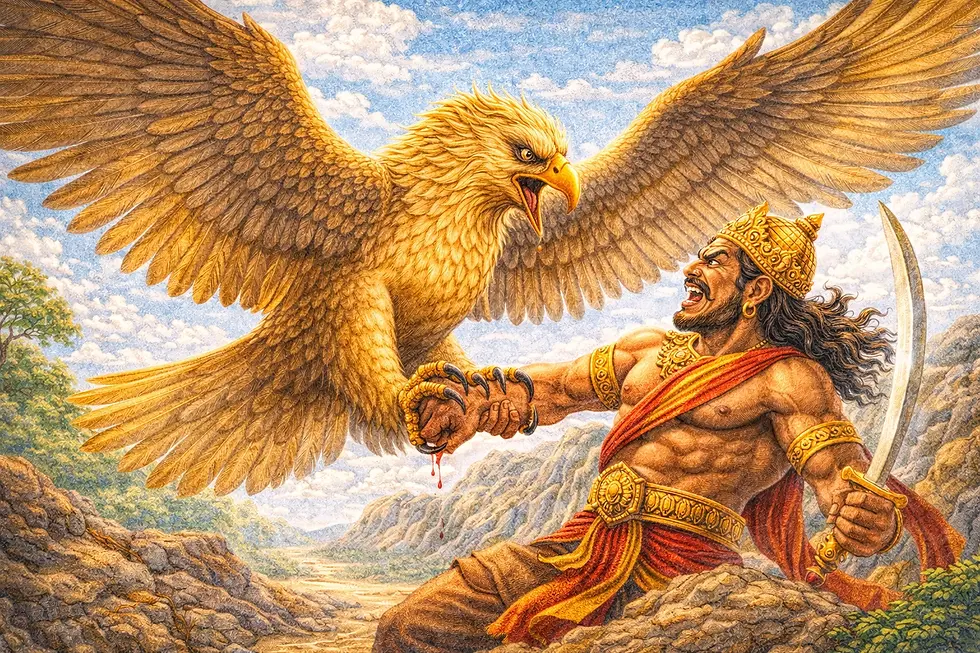
स आह - "नदीतटात् श्येनेन हृतः" इति। | He said - "He was carried away from the river bank by a hawk." |
श्रेष्ठी आह - "मिथ्यावादिन! किं क्वचित् श्येनः बालम् हर्तुं शक्नोति?" | The banker said - "Liar! Can a hawk ever carry a boy anywhere?" |
(न्यायालयस्य दृश्यम्) | (Court Scene) |
"भोः सत्यवादिन्! यथा श्येनो बालं न नयति तथा मूषका अपि लौहमयीं तुलां न भक्षयन्ति।" | "O Truthful one! Just as a hawk does not carry a boy, similarly mice also do not eat an iron balance." |
"तदर्पय मे तुलां यदि दारकेण प्रयोजनम्।" | "So give me my balance if you have need of your son." |
3. Word Meanings (Kathin Shabdarth)
अधिष्ठाने (Adhishtane) = In a place / town (स्थाने)
विभवक्षयात् (Vibhavakshayat) = Due to loss of wealth (धनाभावात्)
निक्षेपभूताम् (Nikshepabhutam) = Deposited / Kept as pledge (धरोहररूपेण)
लौहघटिता (Lauhaghatita) = Made of iron (लोहनिर्मिता)
श्येनः (Shyenah) = Hawk / Falcon (बाज पक्षी)
अभ्यागत (Abhyagata) = Guest / Visitor (अतिथि)
प्रक्षिप्य (Prakshipya) = Having thrown/hidden (निधाय / संस्थाप्य)
उपार्जिता (Uparjita) = Earned / Acquired (अर्जिता)
स्नानार्थम् (Snanartham) = For bathing (स्नानाय)
सभ्याः (Sabhyaah) = Courtiers / Judges (सभासदाः)
4. Competency-Based Assessment
A. Question Construction (Prashna Nirman)
Sentence | Question | Explanation |
जीर्णधनः विभवक्षयात् देशान्तरं गन्तुमिच्छन् व्यचिन्तयत्। | कः विभवक्षयात् देशान्तरं गन्तुमिच्छन् व्यचिन्तयत्? | Used 'Kah' because 'Jinnadhanah' is Masculine Singular subject. |
तुला मूषकैः भक्षिता। | तुला कैः भक्षिता? | Used 'Kaih' because 'Mushakaih' is Masculine Instrumental Plural. |
सः ईश्वरम् उवाच। (Hypothetical from context) / सः श्रेष्ठिनम् उवाच। | सः कम् उवाच? | Used 'Kam' for the object (Dvitiya Vibhakti). |
शिशुः नदीतटात् हृतः। | शिशुः कुतः / कस्मात् हृतः? | Used 'Kutah' (From where) or 'Kasmat' for Ablative case. |
श्येनः बालं हर्तुं न शक्नोति। | कः बालं हर्तुं न शक्नोति? | Used 'Kah' for the subject (Hawk). |
B. Bhashik Karyam (Linguistic Work)
Question: In "त्वदीया तुला मूषकैः भक्षिता", identify the Visheshan (Adjective).
Answer: त्वदीया (Yours) or भक्षिता (Eaten).
Explanation: 'Tvadiya' describes the 'Tula' (Balance).
Question: In "सः देशान्तरं यथेच्छया भ्रान्त्वा पुनः आगतः", what is the suffix in भ्रान्त्वा?
Answer: क्त्वा (Ktva)
Explanation: Bhram + Ktva = Bhramitva/Bhrantva (Having wandered).
Question: Write the synonym for "दरिद्रः" (Poor) implied in the text.
Answer: विभवहीनः (Devoid of wealth).
Explanation: The text uses 'Vibhavahina' to describe a poor person.
Question: Write the antonym for "सत्यम्" (Truth) from the text.
Answer: मिथ्या (False/Lie).
Explanation: The banker is called 'Mithyavadin' (Liar).
5. Subjective Q&A (Pathit Avabodhanam)
A. Ekpaden Uttarat (One Word Answers)
Q: वणिक्पुत्रस्य नाम किम् आसीत्? (What was the merchant's son's name?)
Ans: जीर्णधनः (Jinnadhan).
Q: तुला कीदृशी आसीत्? (What was the balance like?)
Ans: लौहघटिता / लौहमयी (Made of iron).
Q: तुला कैः भक्षिता इति श्रेष्ठिना उक्तम्? (By whom was the balance eaten, according to the banker?)
Ans: मूषकैः (By mice).
Q: पुत्रः केन हृतः इति जीर्णधनः वदति? (By whom was the son taken, says Jinnadhan?)
Ans: श्येनेन (By a hawk).
B. Purnavakyen Uttarat (Full Sentence Answers)
Q: देशान्तरं गन्तुमिच्छन् वणिक्पुत्रः किं व्यचिन्तयत्? (Wishing to go abroad, what did the merchant's son think?)
Ans: सः व्यचिन्तयत् - "यत्र देशे अथवा स्थाने भोगाः भुक्ताः, तस्मिन् विभवहीनः यः वसेत् सः पुरुषाधमः।" (He thought: In a place where one has enjoyed pleasures, living there without wealth makes one a lowly person).
Q: जीर्णधनः श्रेष्ठिपुत्रं कुत्र गोपितवान्? (Where did Jinnadhan hide the banker's son?)
Ans: जीर्णधनः श्रेष्ठिपुत्रं गिरिगुहायाम् गोपितवान्। (Jinnadhan hid the banker's son in a mountain cave).
Q: न्यायाधिकारिणः कथं निर्णयं कृतवन्तः? (How did the judges decide?)
Ans: न्यायाधिकारिणः तौ सम्बोध्य तुला-शिशु-प्रदानेन सन्तोषितवन्तः। (The judges addressed both and satisfied/reconciled them by exchanging the balance and the child).
6. Integrated Grammar (Vyakaran)
A. Sandhi (Joining/Splitting)
पुरुषाधमः = पुरुष + अधमः (Dirgha Sandhi).
नास्ति = न + अस्ति (Dirgha Sandhi).
श्रेष्ट्याह = श्रेष्ठी + आह (Yan Sandhi).
स्नानार्थम् = स्नान + अर्थम् (Dirgha Sandhi).
ममैव = मम + एव (Vriddhi Sandhi).
B. Pratyaya (Suffixes)
आदाय = आ + दा + ल्यप् (Having taken).
गत्वा = गम् + क्त्वा (Having gone).
विहस्य = वि + हस् + ल्यप् (Having laughed).
सम्बोध = सम् + बुध् + ल्यप् (Having addressed).
स्नातुम् = स्ना + तुमुन् (To bathe).
C. Samas (Compounds)
स्नानार्थम् = स्नानाय इदम् (Chaturthi Tatpurusha).
लौहघटिता = लौहेन घटिता (Tritiya Tatpurusha).
देशान्तरम् = अन्यः देशः (Karmadharaya / Nitya Samas).
विभवहीनः = विभवेन हीनः (Tritiya Tatpurusha).
7. Event Sequencing (Ghatnakram)
Jumbled Sentences:
जीर्णधनः गिरीगुहायां श्रेष्ठिपुत्रं प्रक्षिप्य गृहमागतः।
जीर्णधनः तुलां निक्षेपभूतां कृत्वा देशान्तरं प्रस्थितः।
श्रेष्ठी कथितवान् यत् तुला मूषकैः भक्षिता।
न्यायाधिकारिणः तौ सन्तोषितवन्तः।
जीर्णधनः स्वतुलां अयाचत।
जीर्णधनः कथितवान् यत् पुत्रः श्येनेन हृतः।
Correct Order:
जीर्णधनः तुलां निक्षेपभूतां कृत्वा देशान्तरं प्रस्थितः। (Jinnadhan deposited the balance and left).
जीर्णधनः स्वतुलां अयाचत। (Jinnadhan asked for his balance).
श्रेष्ठी कथितवान् यत् तुला मूषकैः भक्षिता। (Banker said mice ate it).
जीर्णधनः गिरीगुहायां श्रेष्ठिपुत्रं प्रक्षिप्य गृहमागतः। (Jinnadhan hid the son in a cave).
जीर्णधनः कथितवान् यत् पुत्रः श्येनेन हृतः। (Jinnadhan said hawk took the son).
न्यायाधिकारिणः तौ सन्तोषितवन्तः। (Judges resolved the issue).
About BhashaLab
BhashaLab is a dynamic platform dedicated to the exploration and mastery of languages - operating both online and offline. Aligned with the National Education Policy (NEP) 2020 and the National Credit Framework (NCrF), we offer language education that emphasizes measurable learning outcomes and recognized, transferable credits.
We offer:
1. NEP alligned offline language courses for degree colleges - English, Sanskrit, Marathi and Hindi
2. NEP alligned offline language courses for schools - English, Sanskrit, Marathi and Hindi
3. Std VIII, IX and X - English and Sanskrit Curriculum Tuitions - All boards
4. International English Olympiad Tuitions - All classes
5. Basic and Advanced English Grammar - Offline and Online - Class 3 and above
6. English Communication Skills for working professionals, adults and students - Offline and Online
Contact: +91 86577 20901, +91 97021 12044
Mail: info@bhashalab.com
Website: www.bhashalab.com


Comments